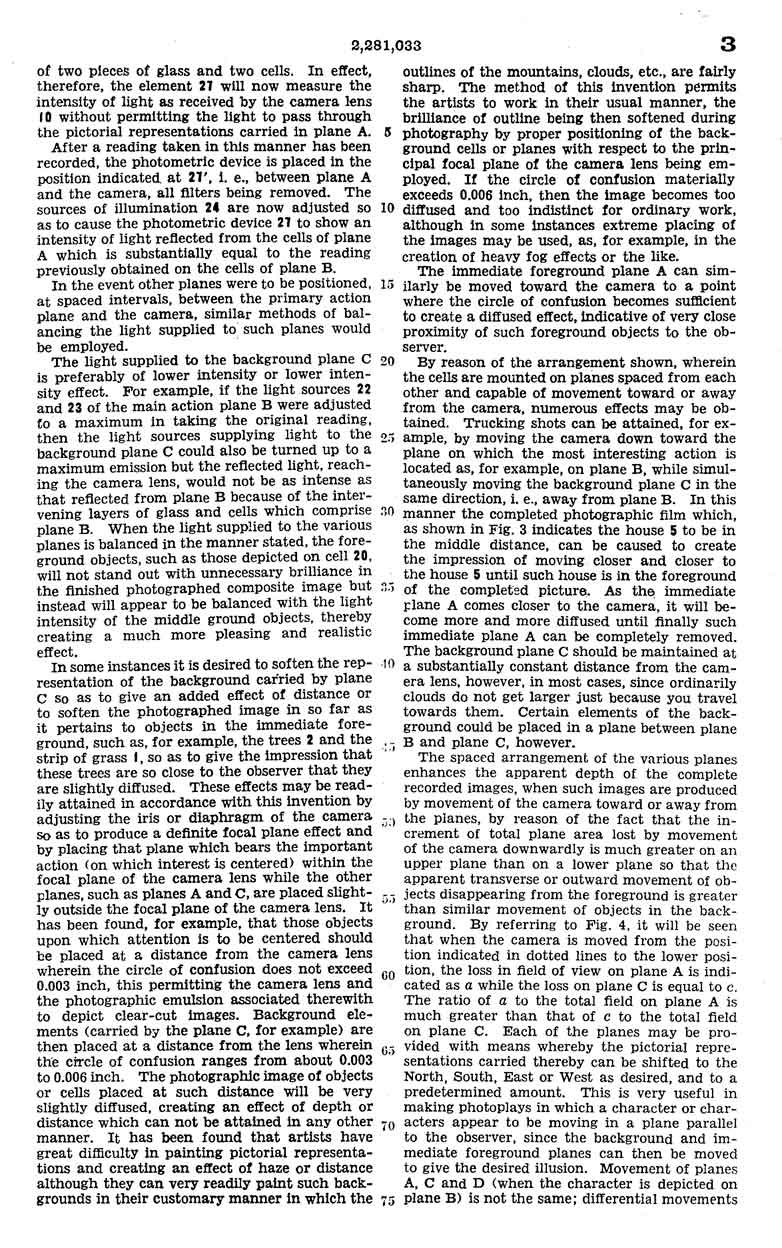
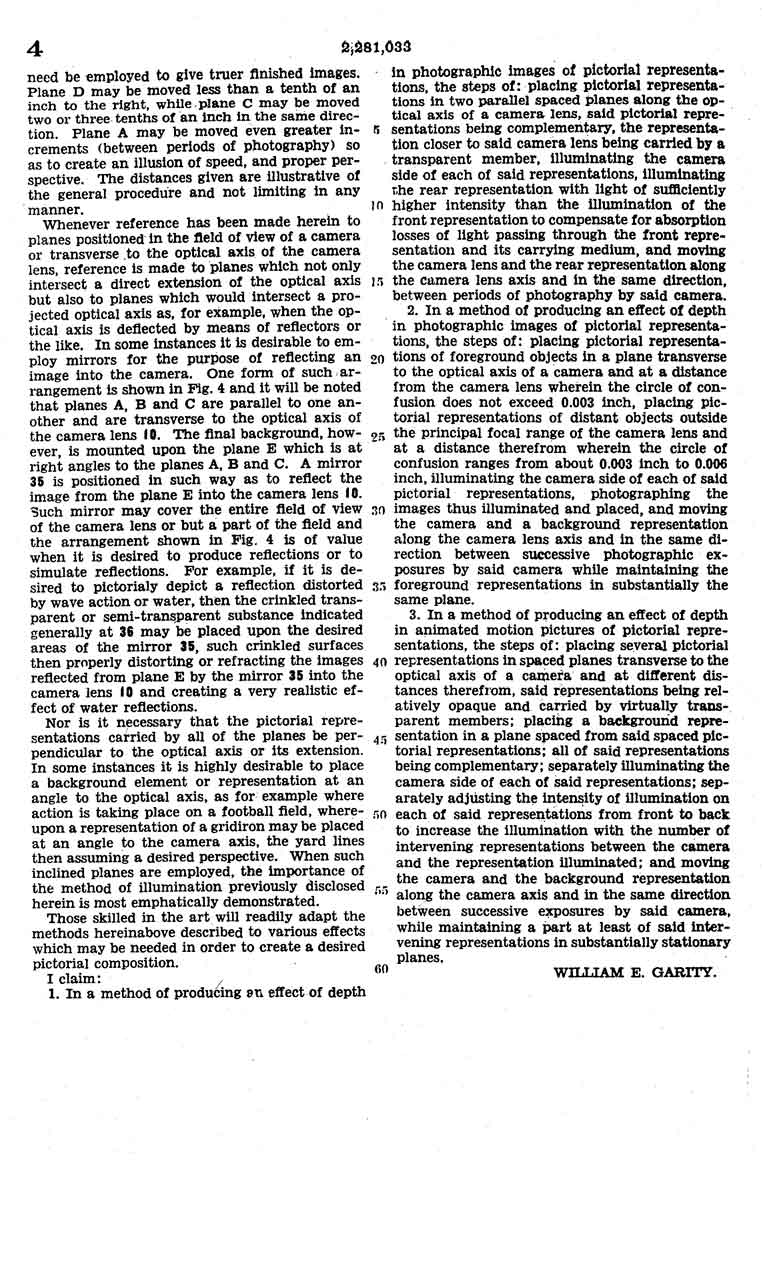
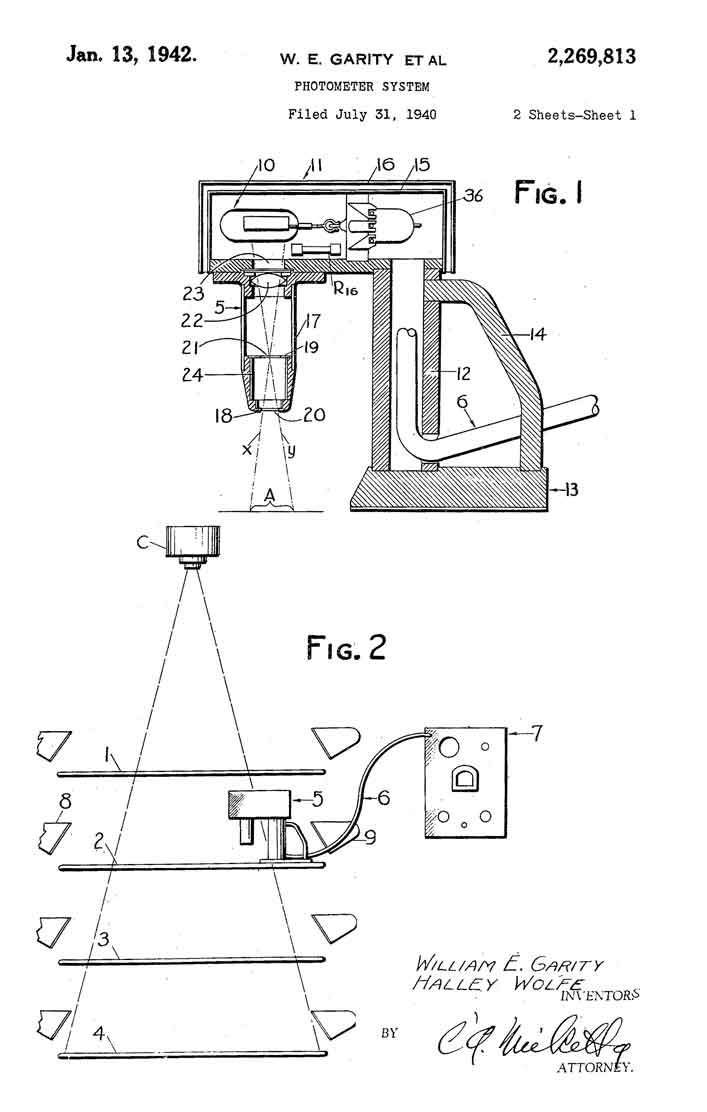
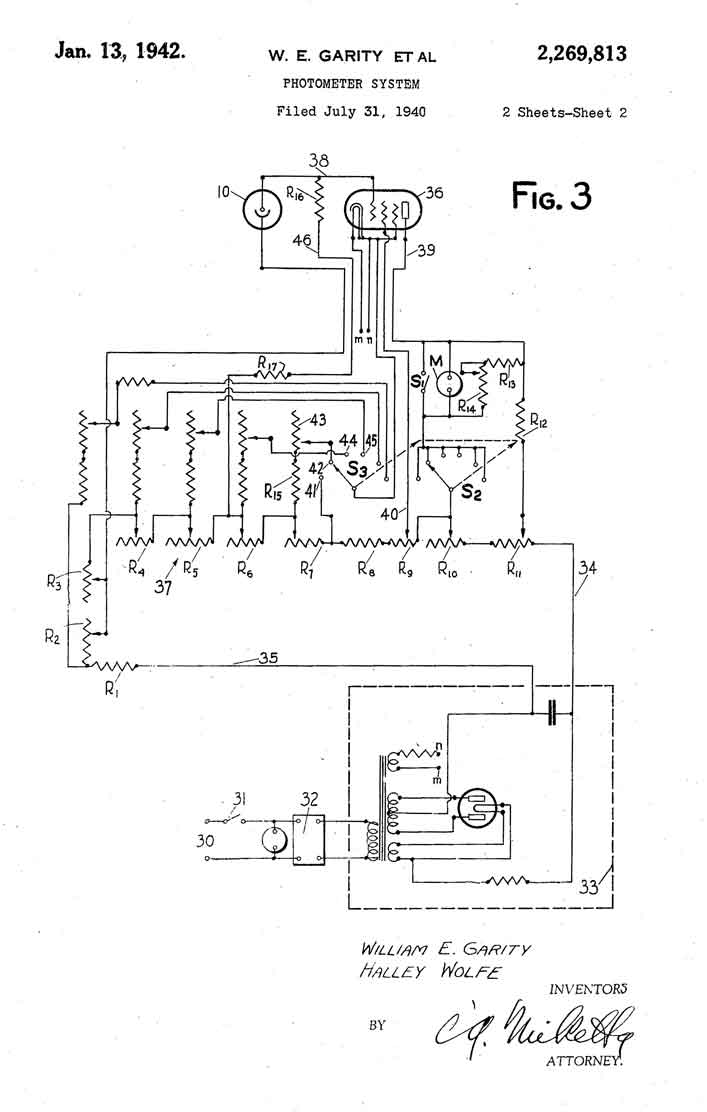
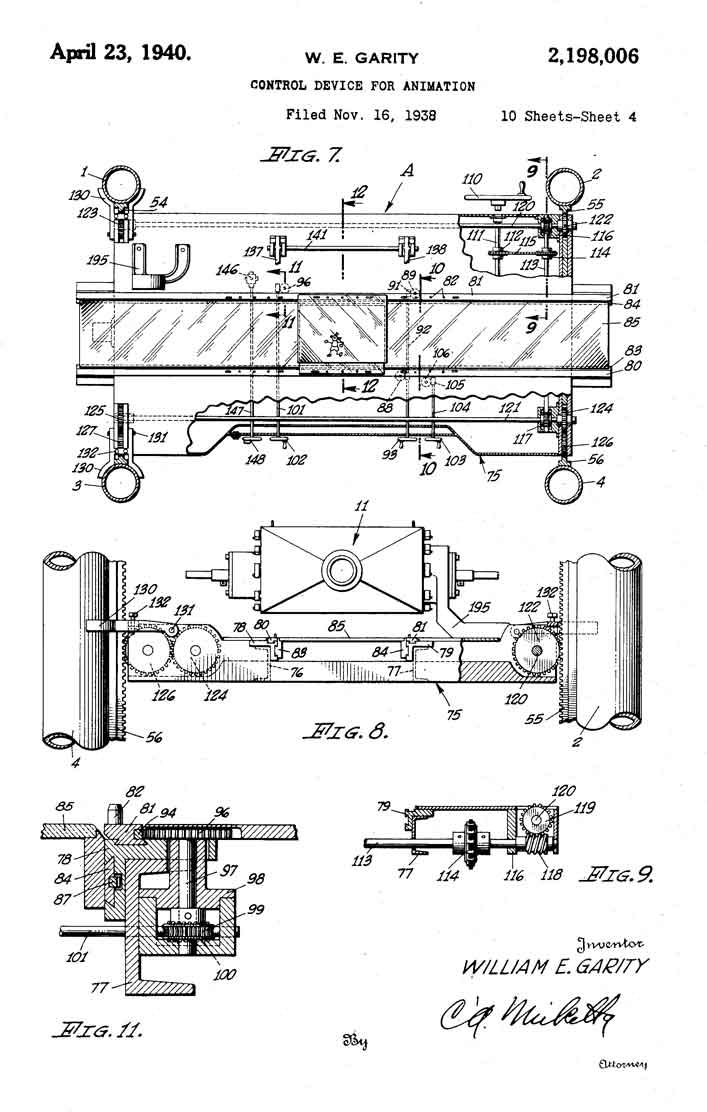
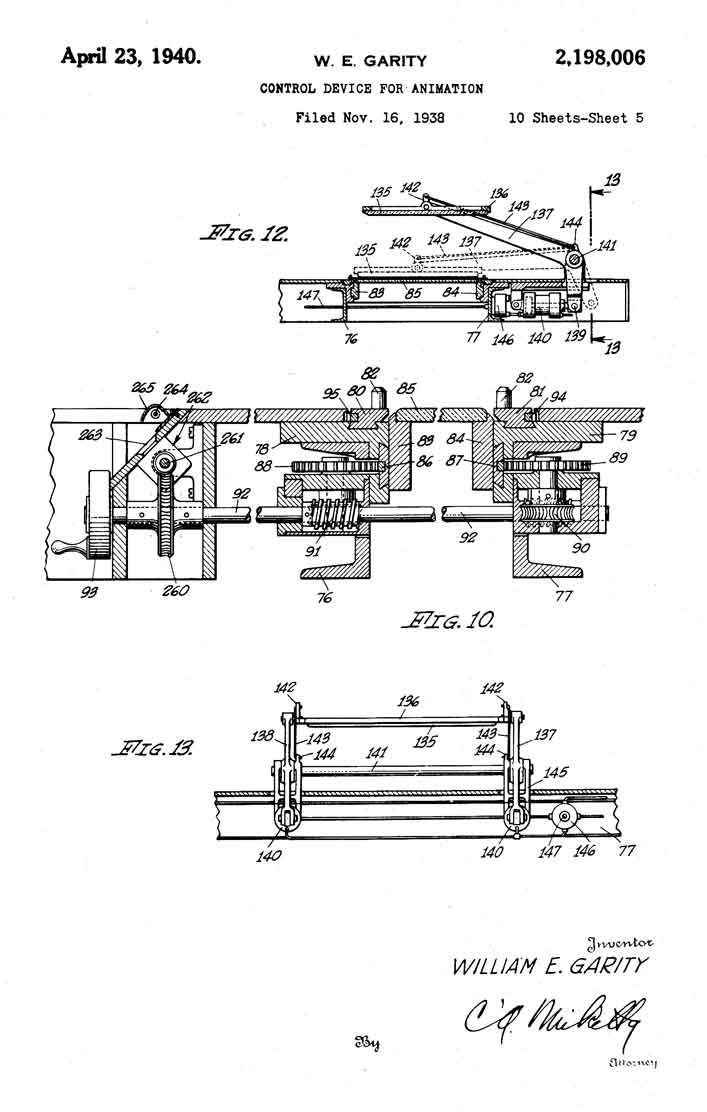
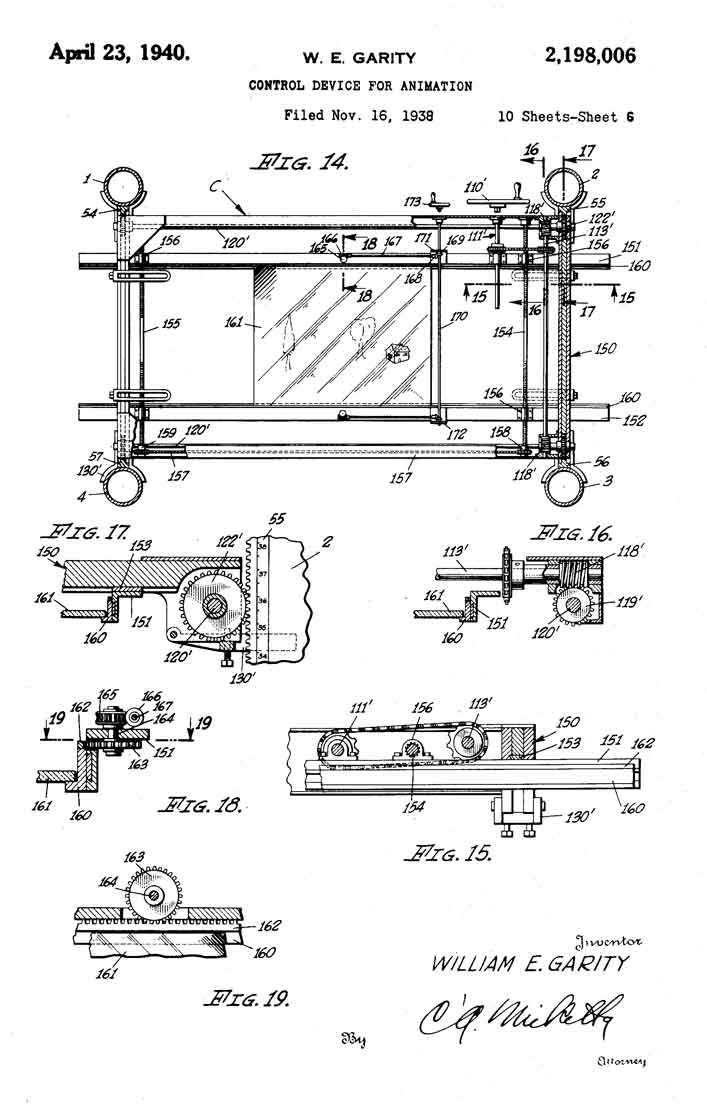
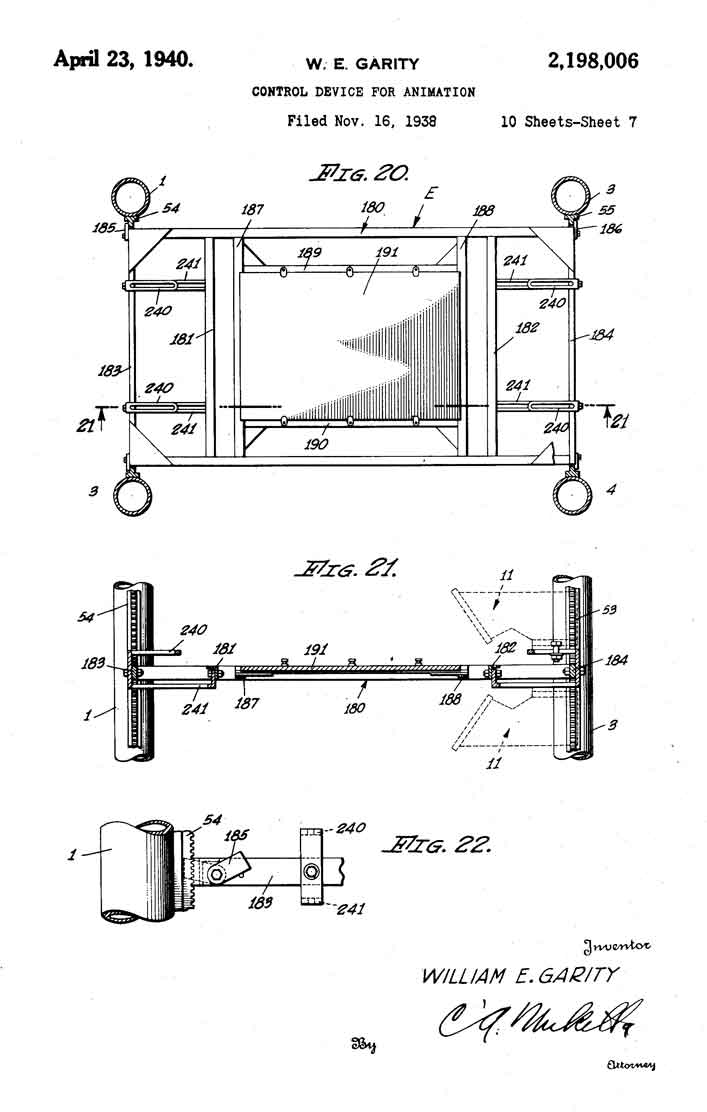
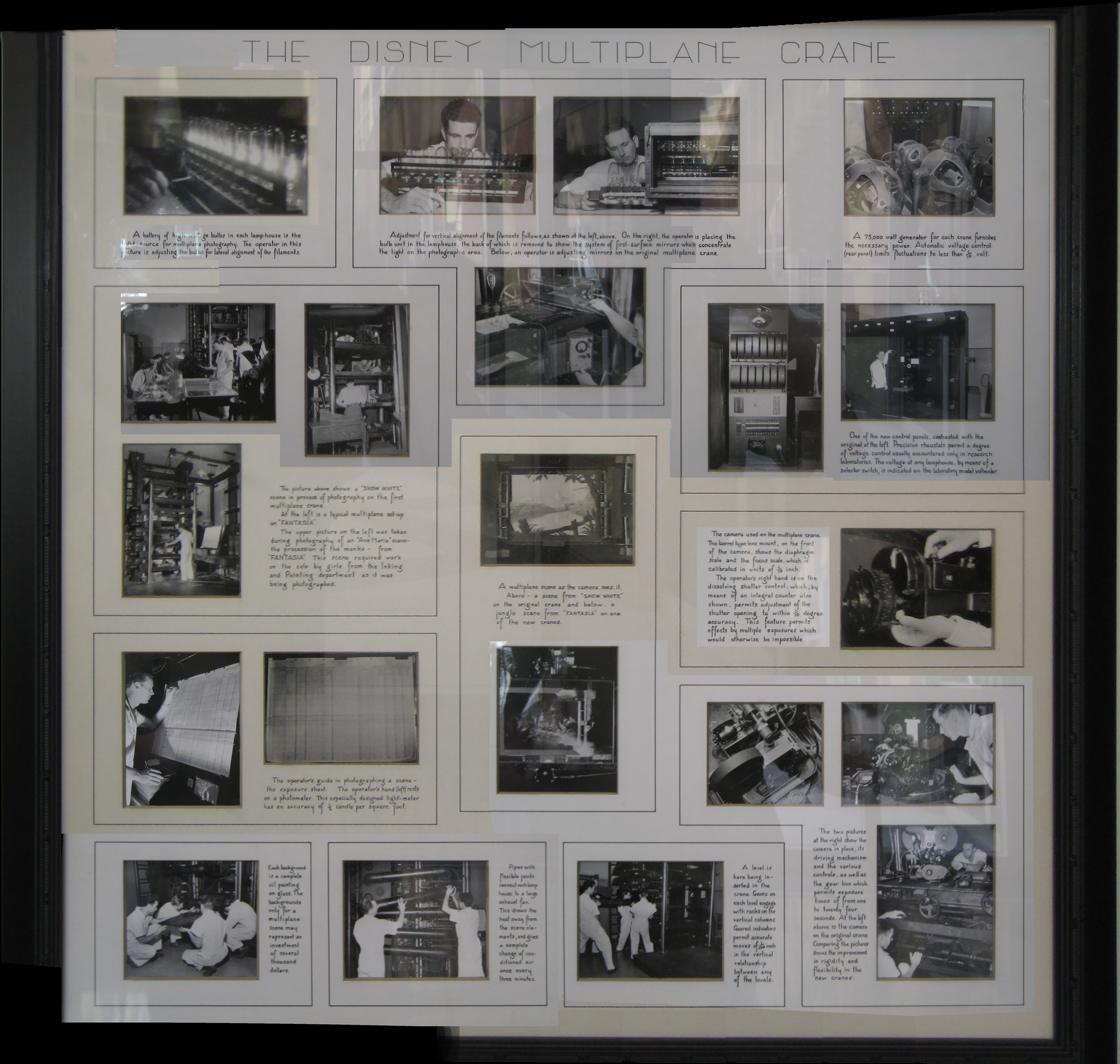
In Glorious Multiplane - 7
Can't get enough of the Multiplane camera either?
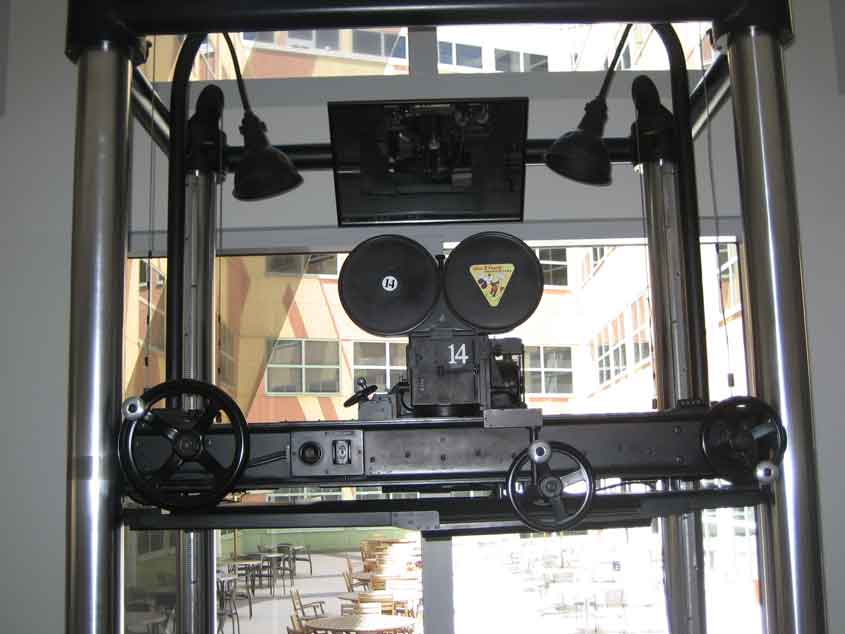
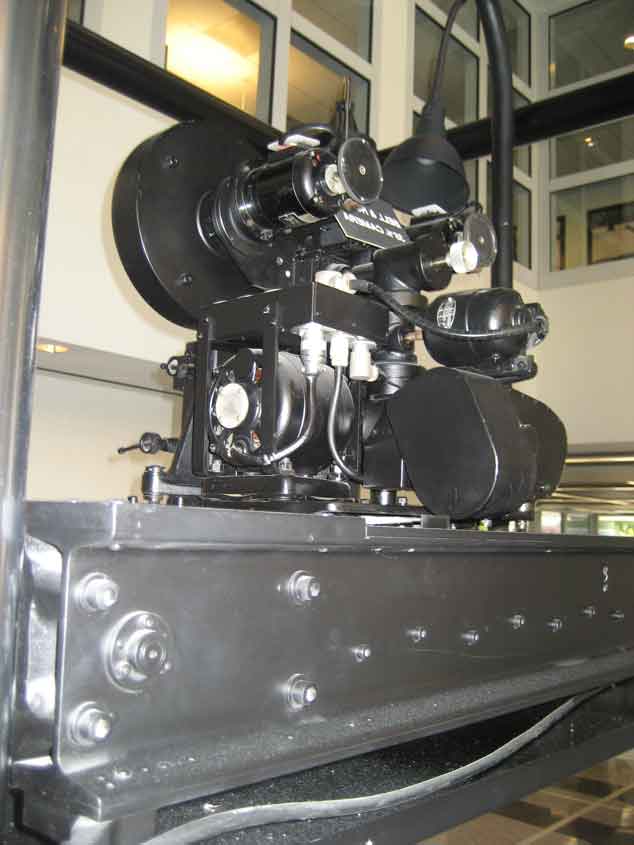
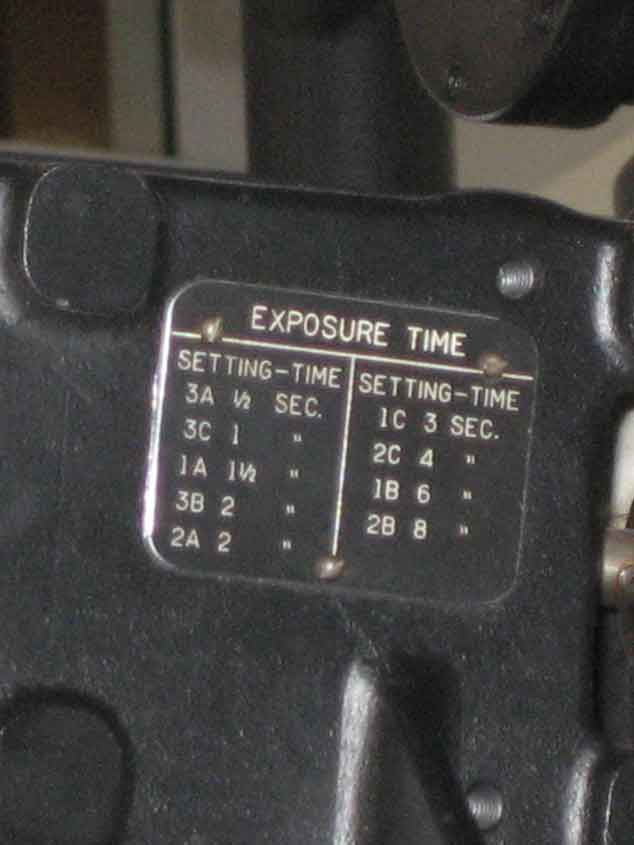
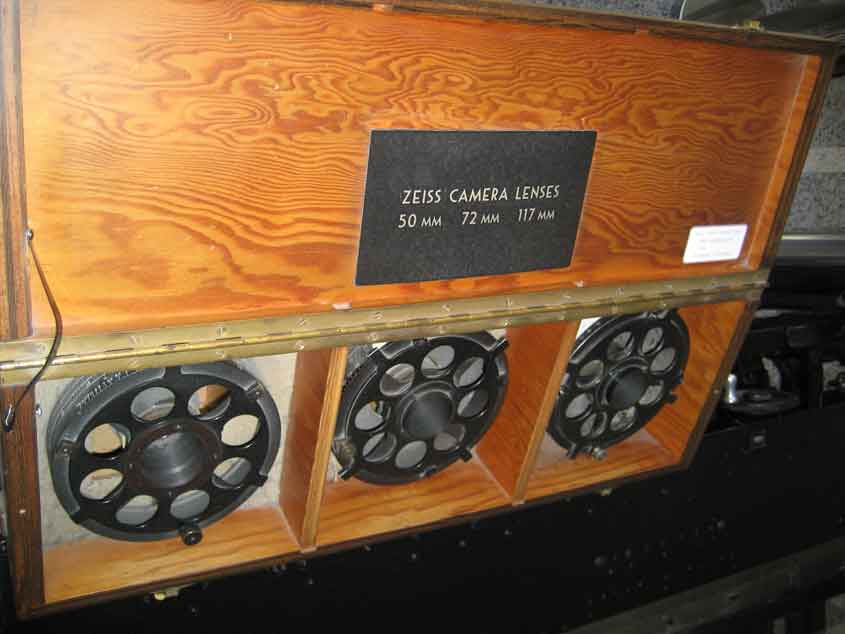
Here is my final posting to top off Multiplane week. I thought of spreading this out, like Disney's 18 month "year," but enough is as good as a feast, especially since most of the readers are out locating metal columns or attending welding class.
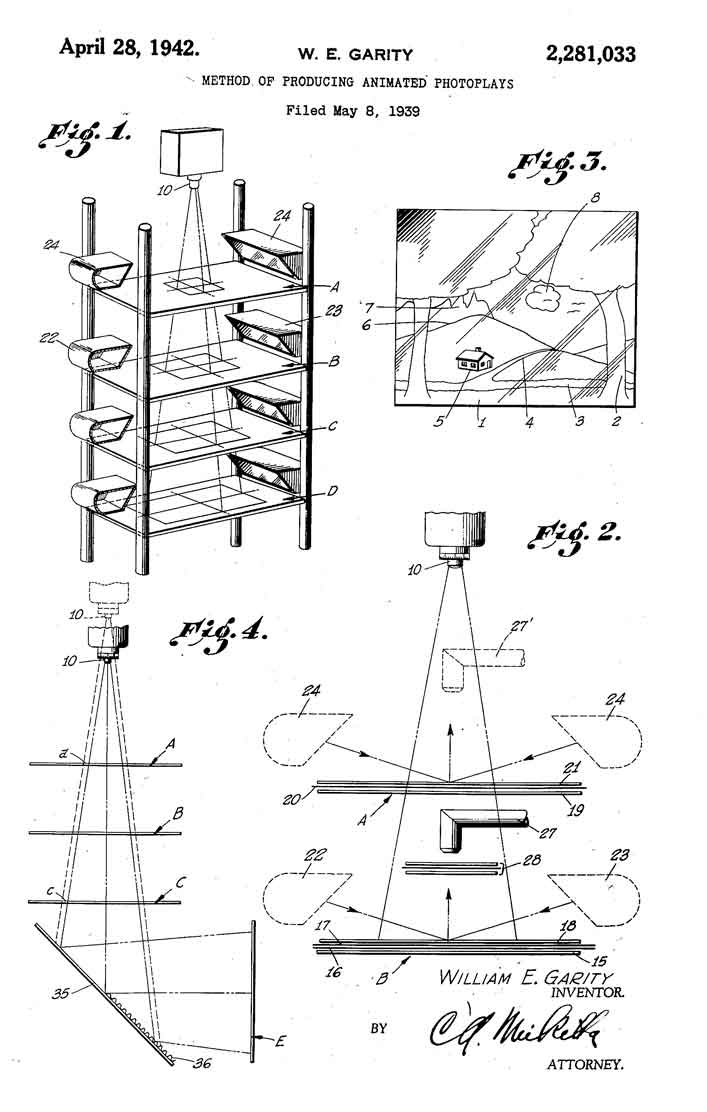
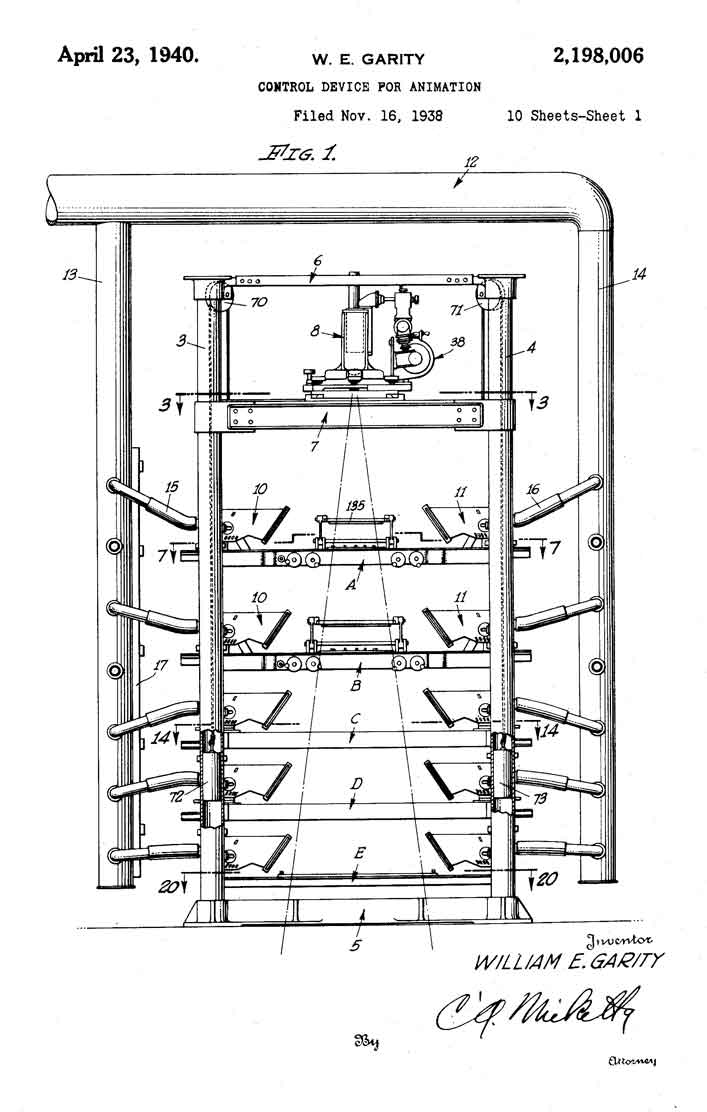
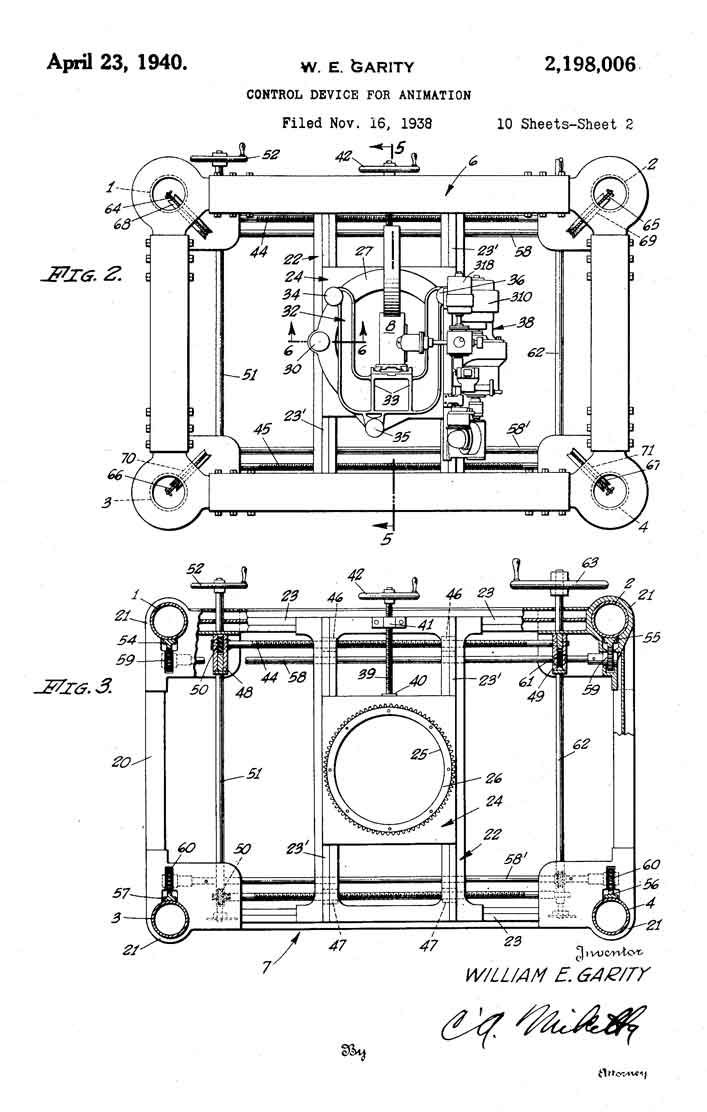
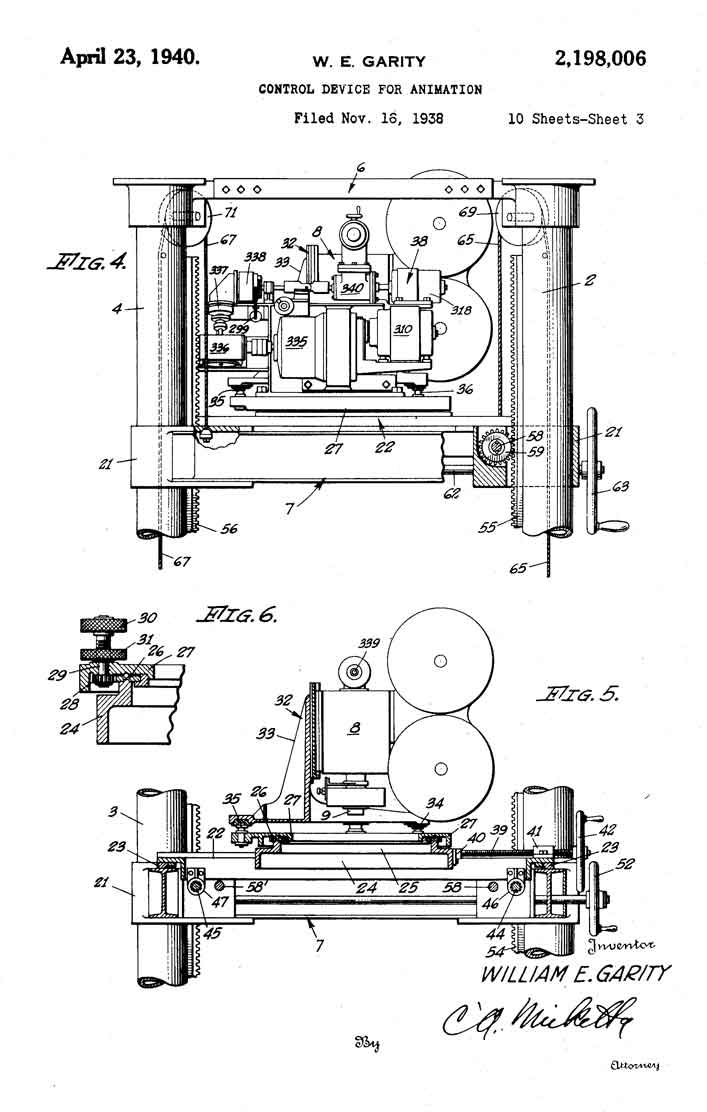
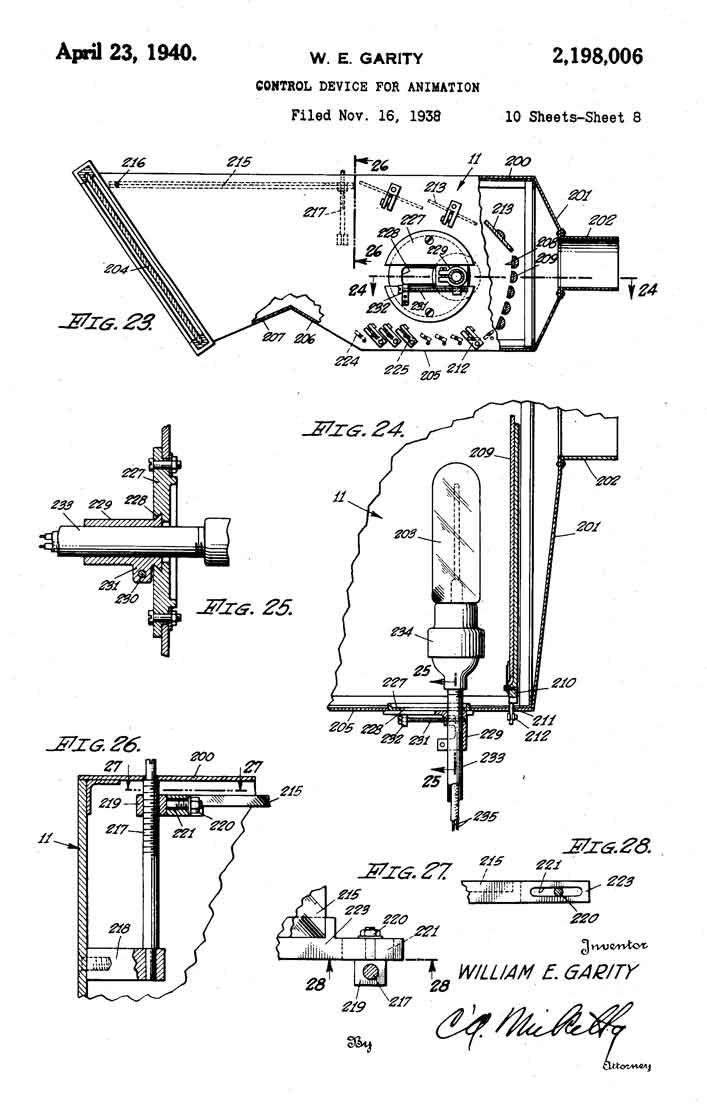
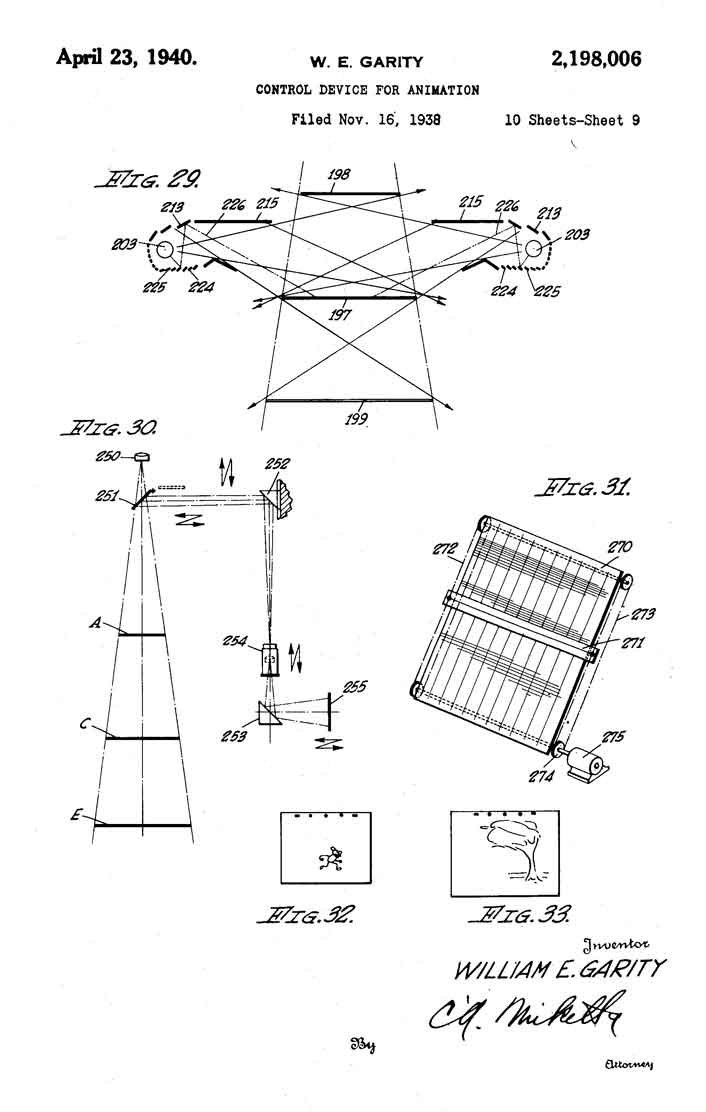
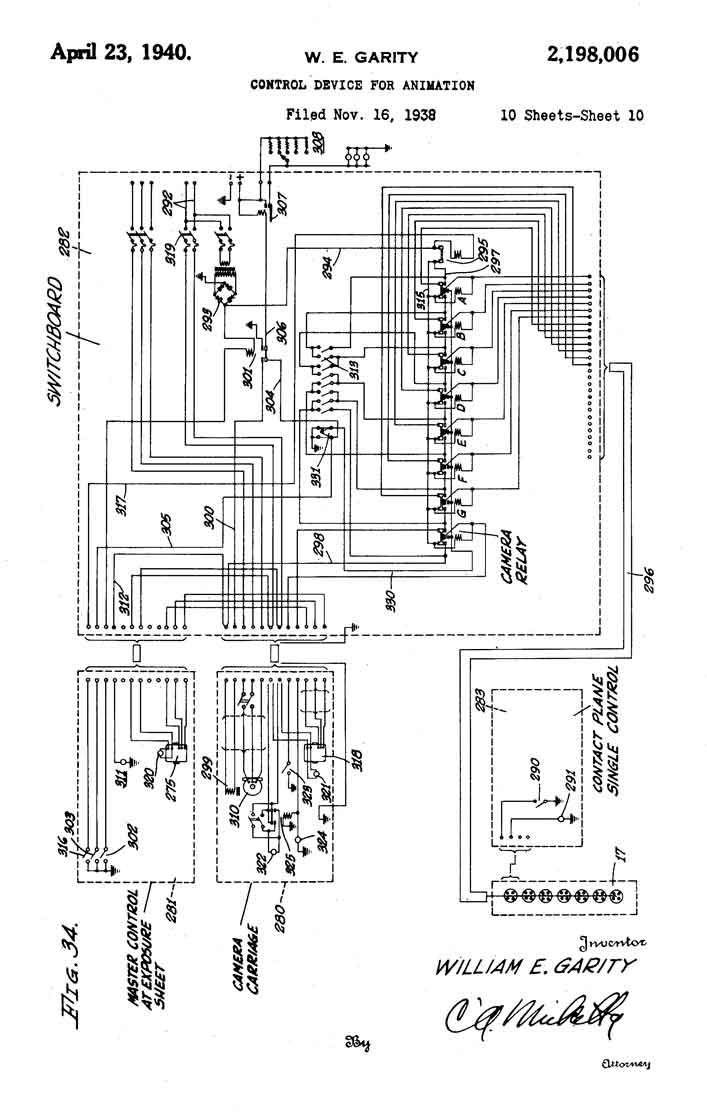
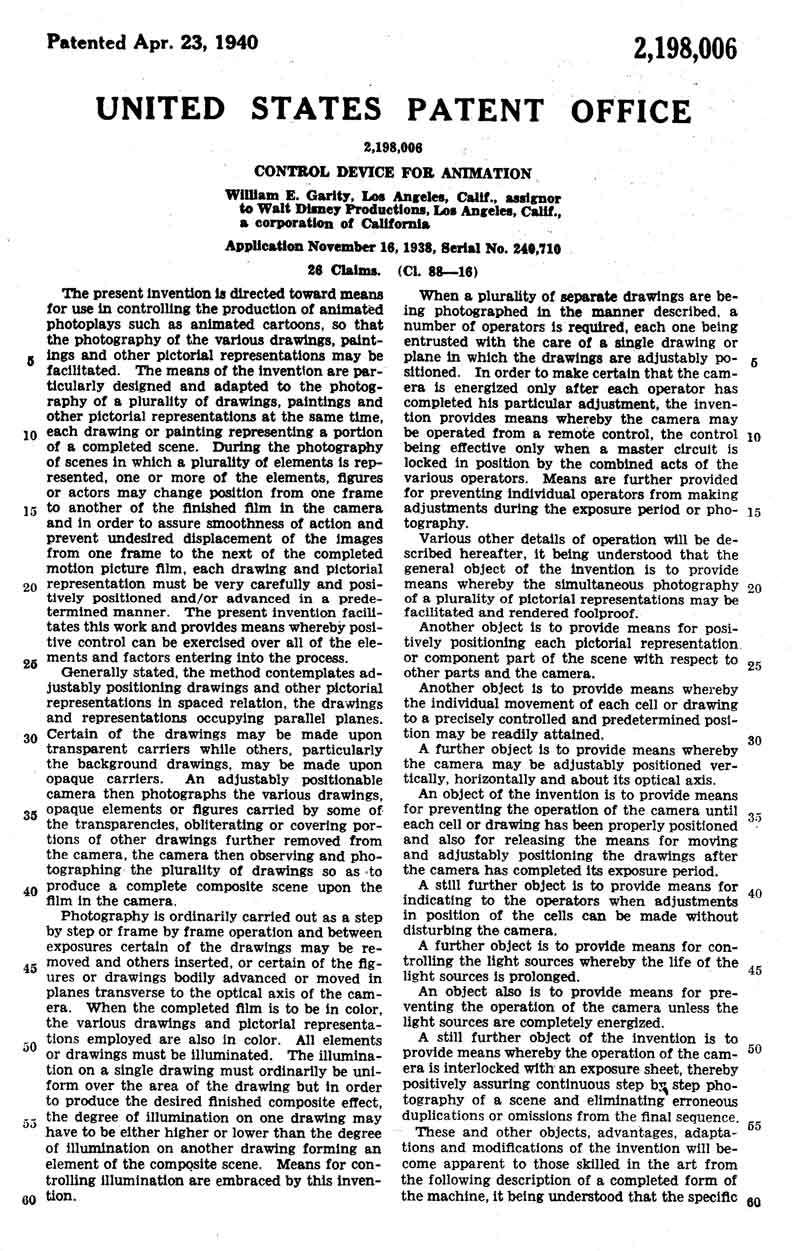
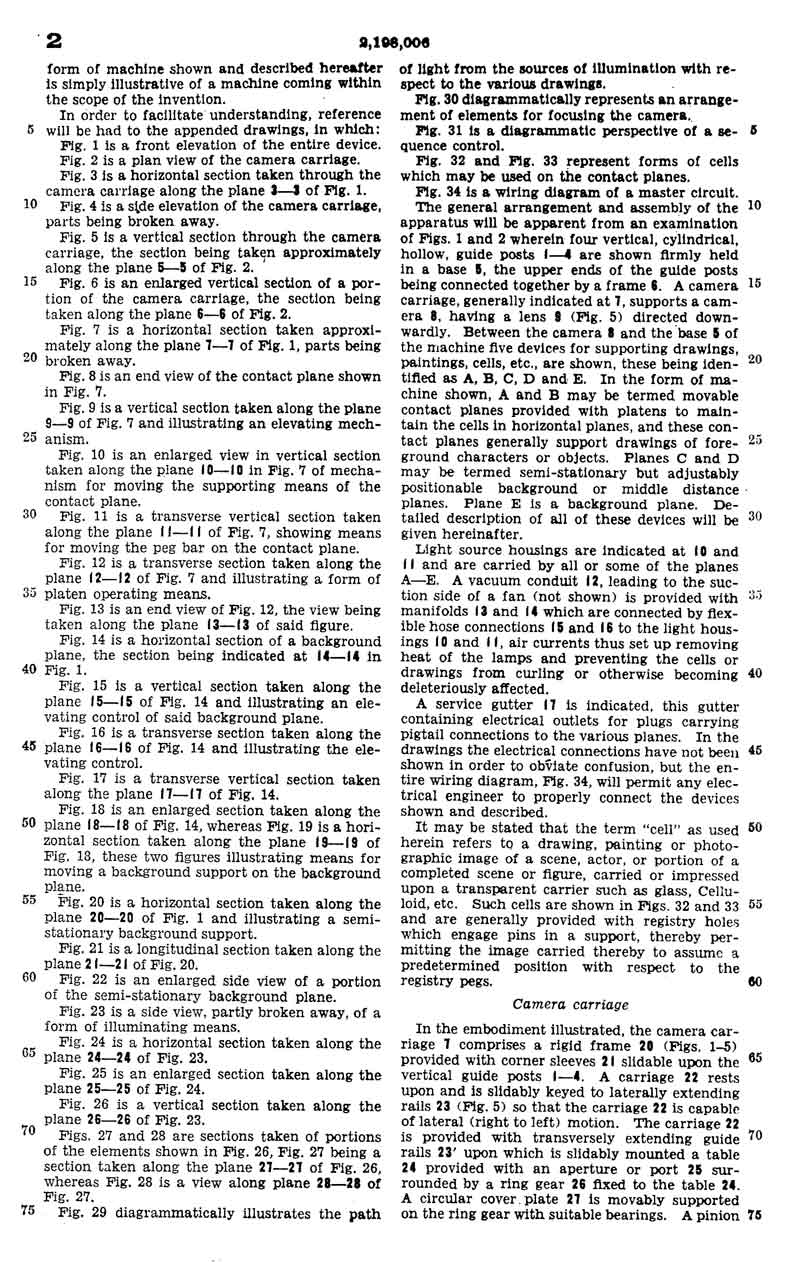
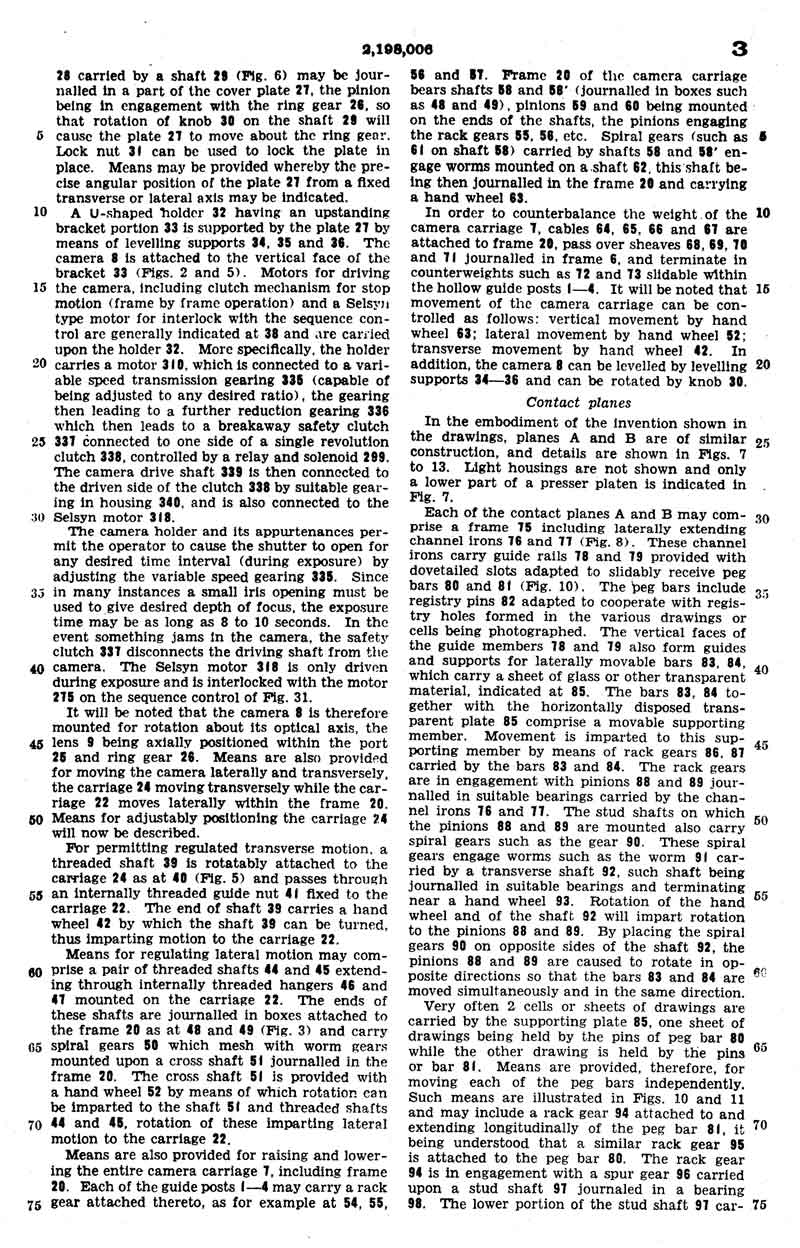
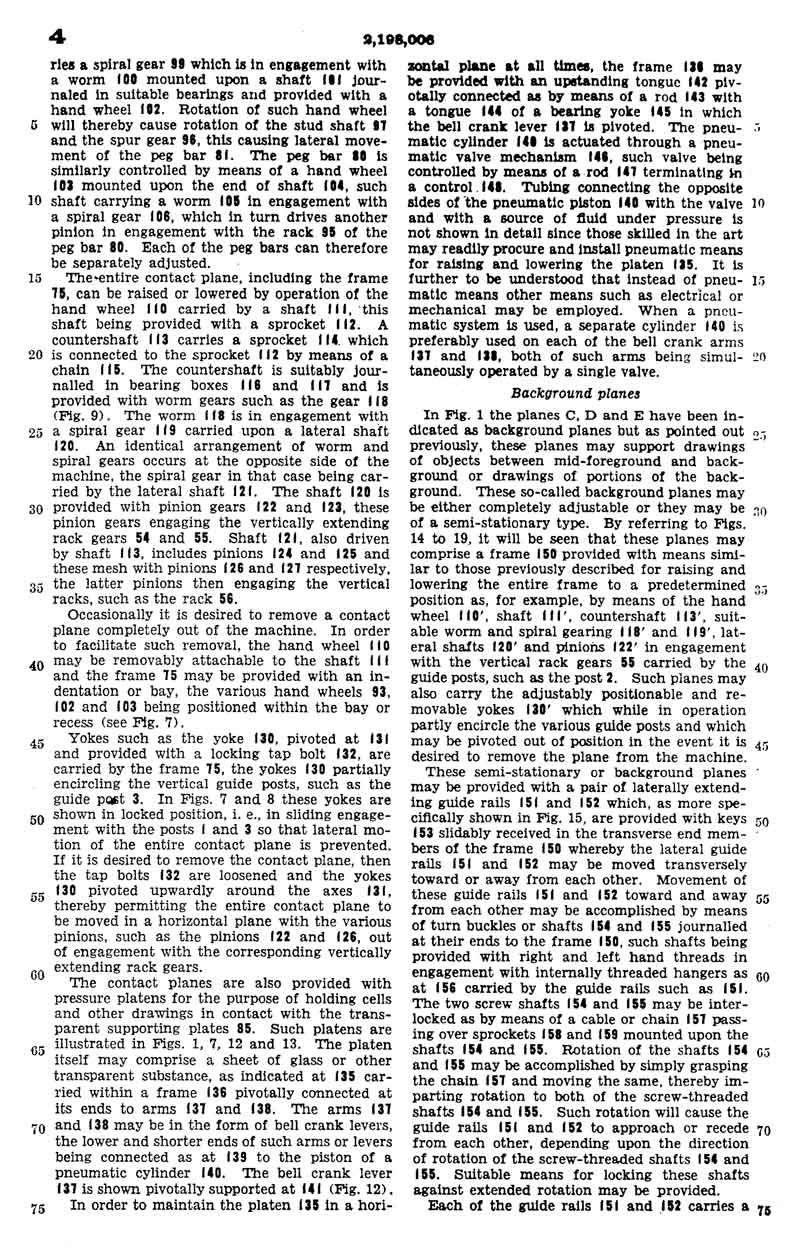
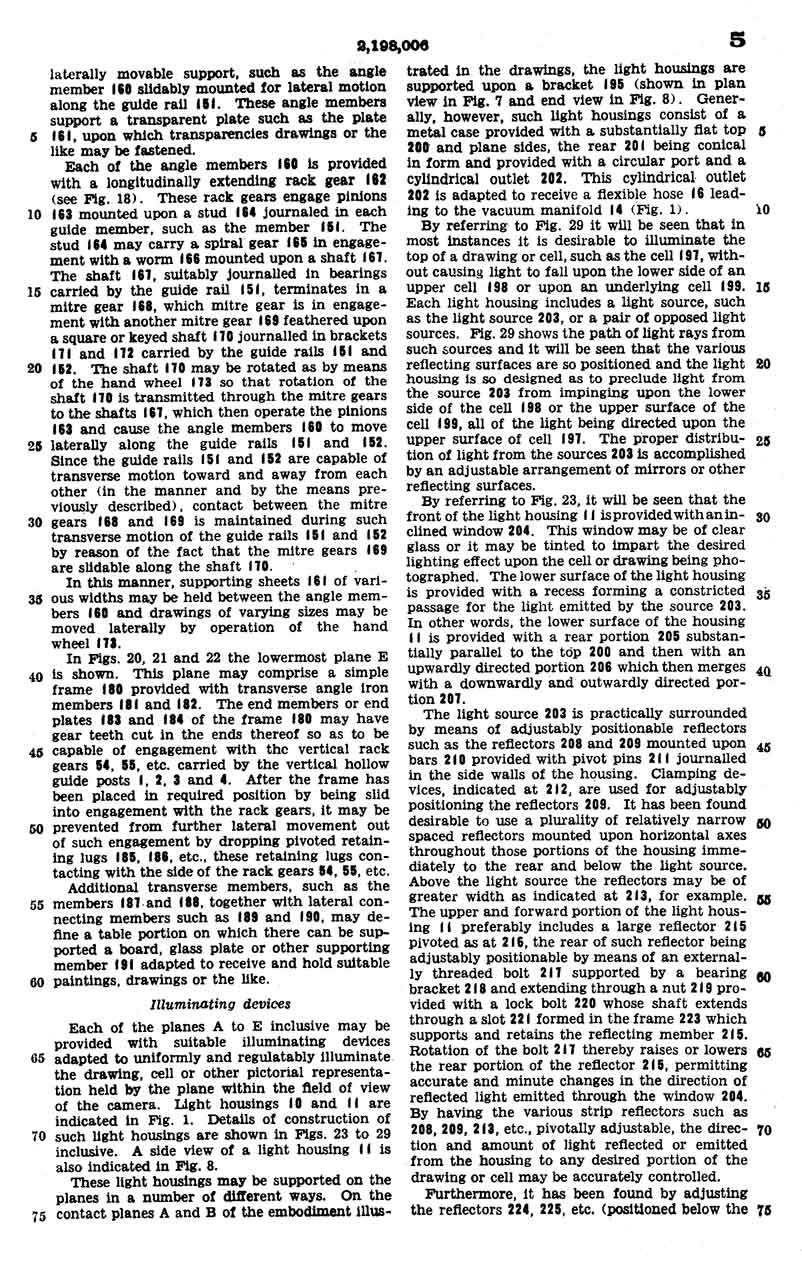
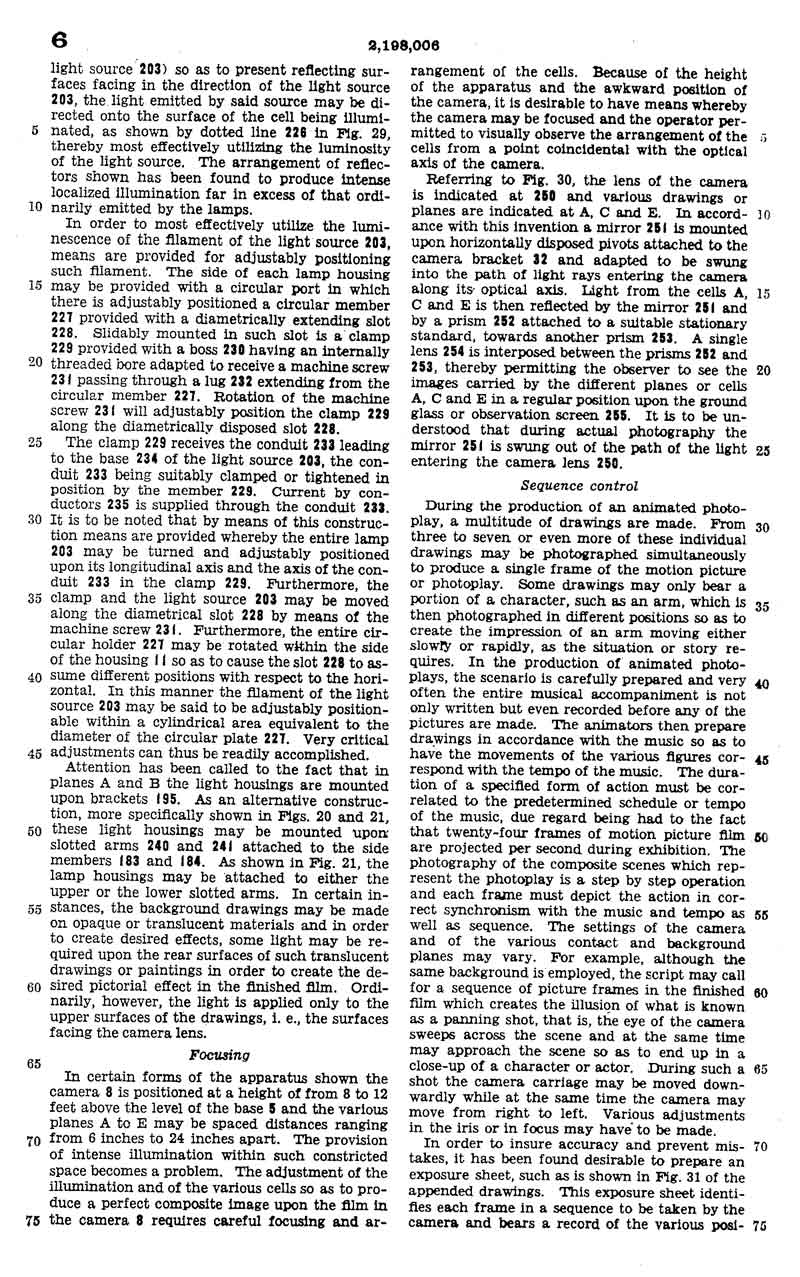
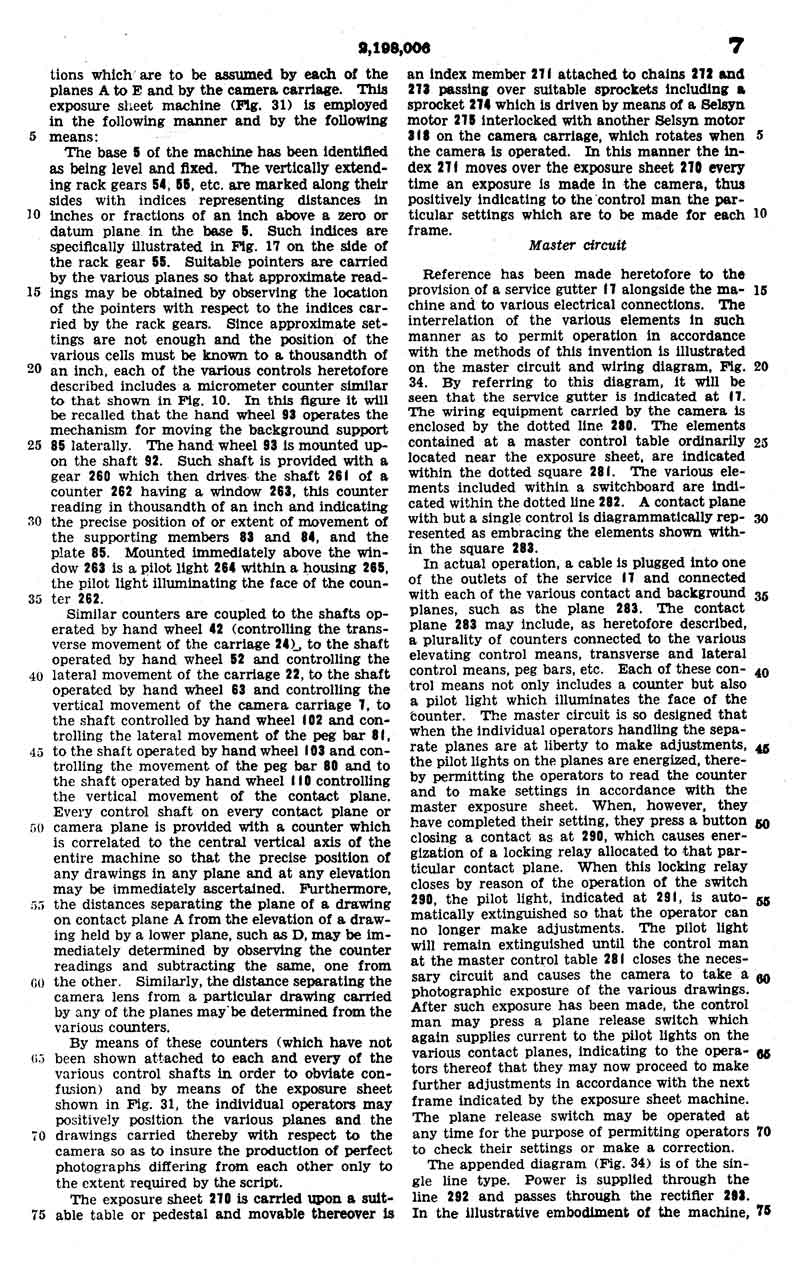
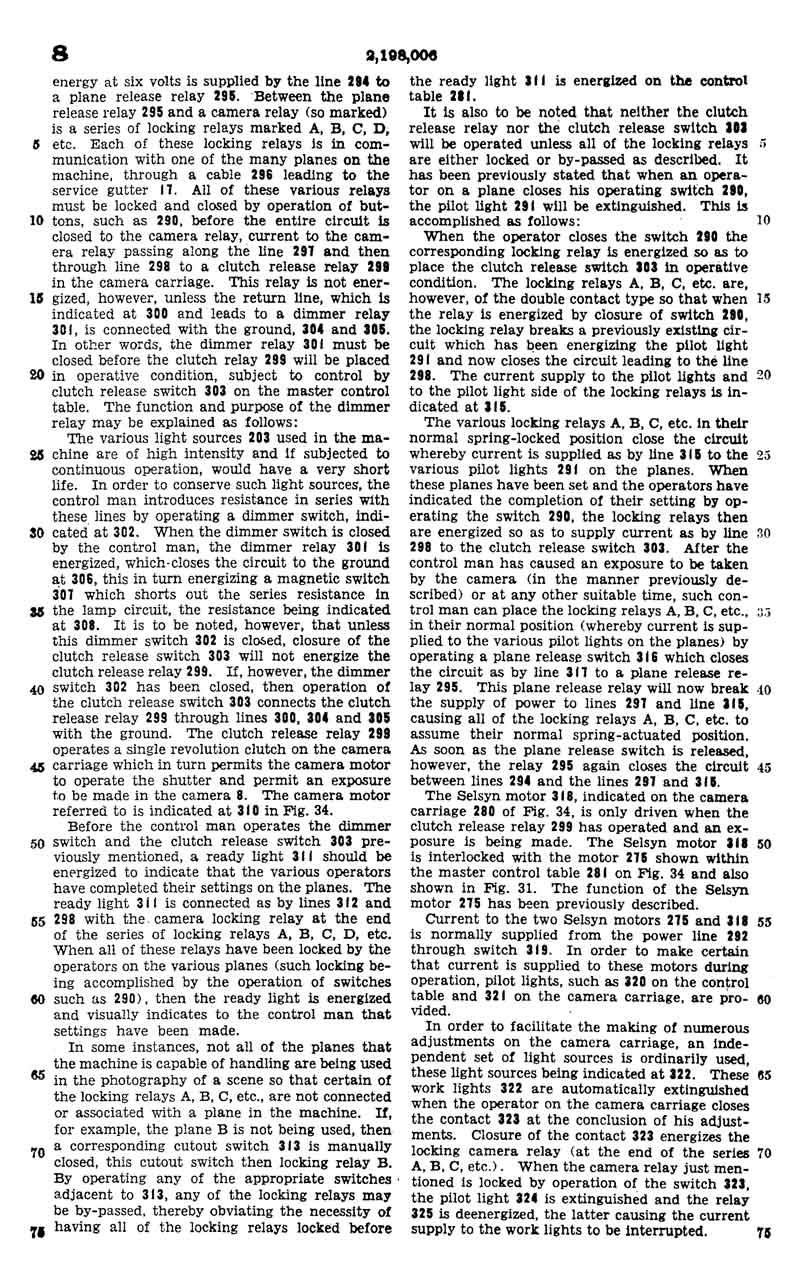
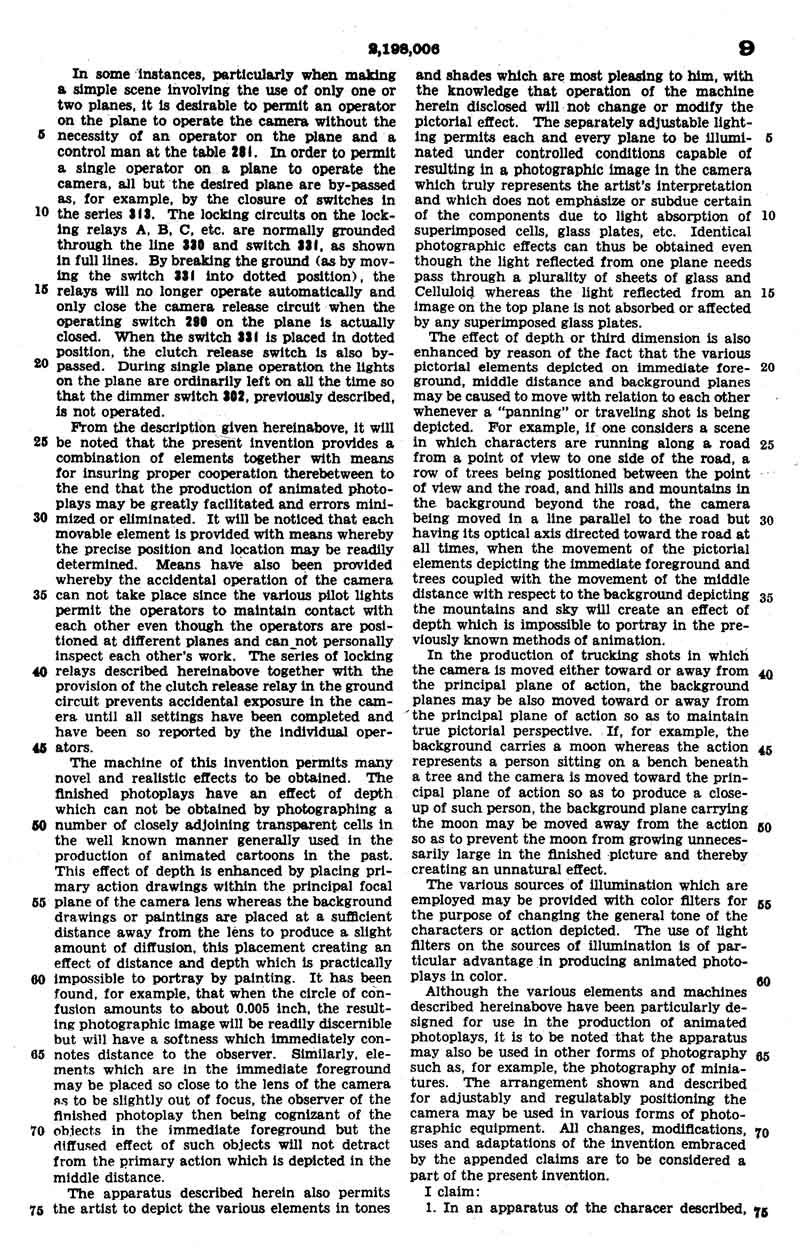
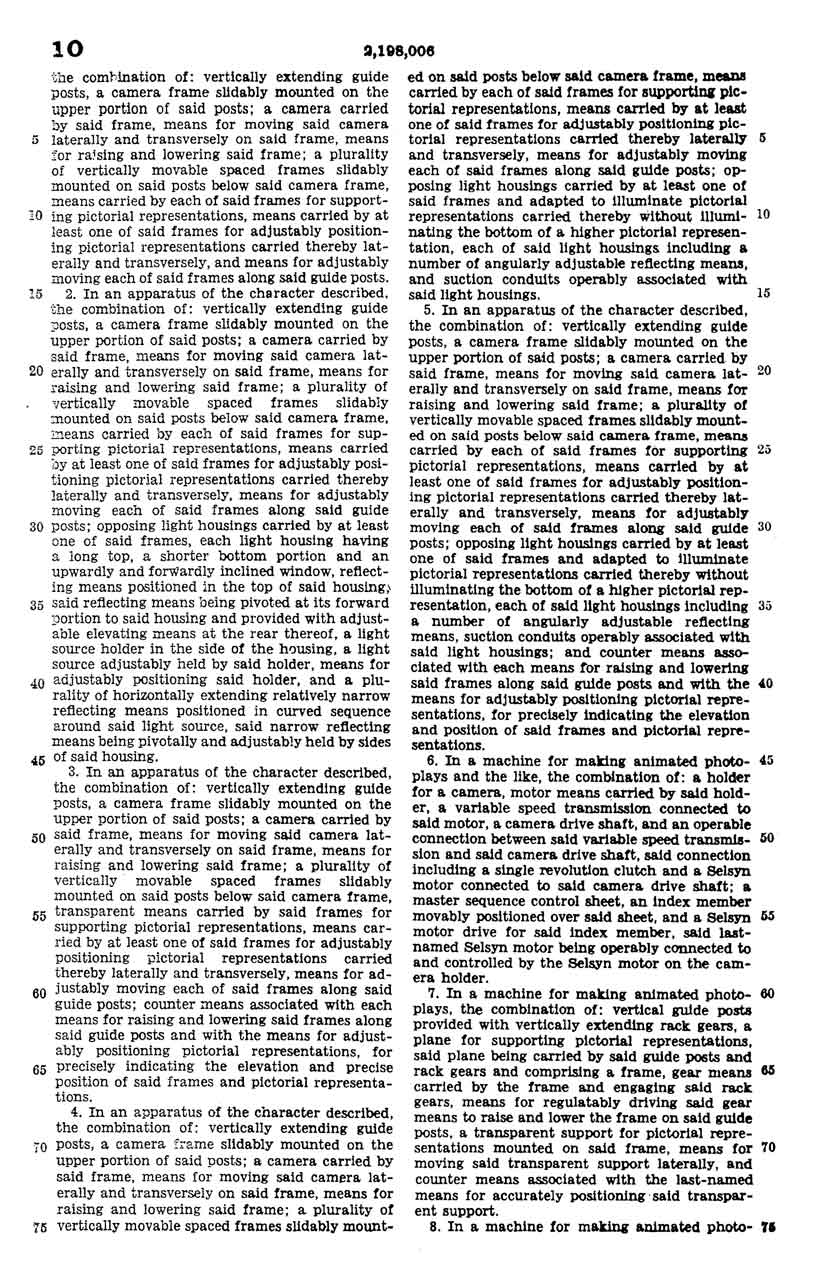
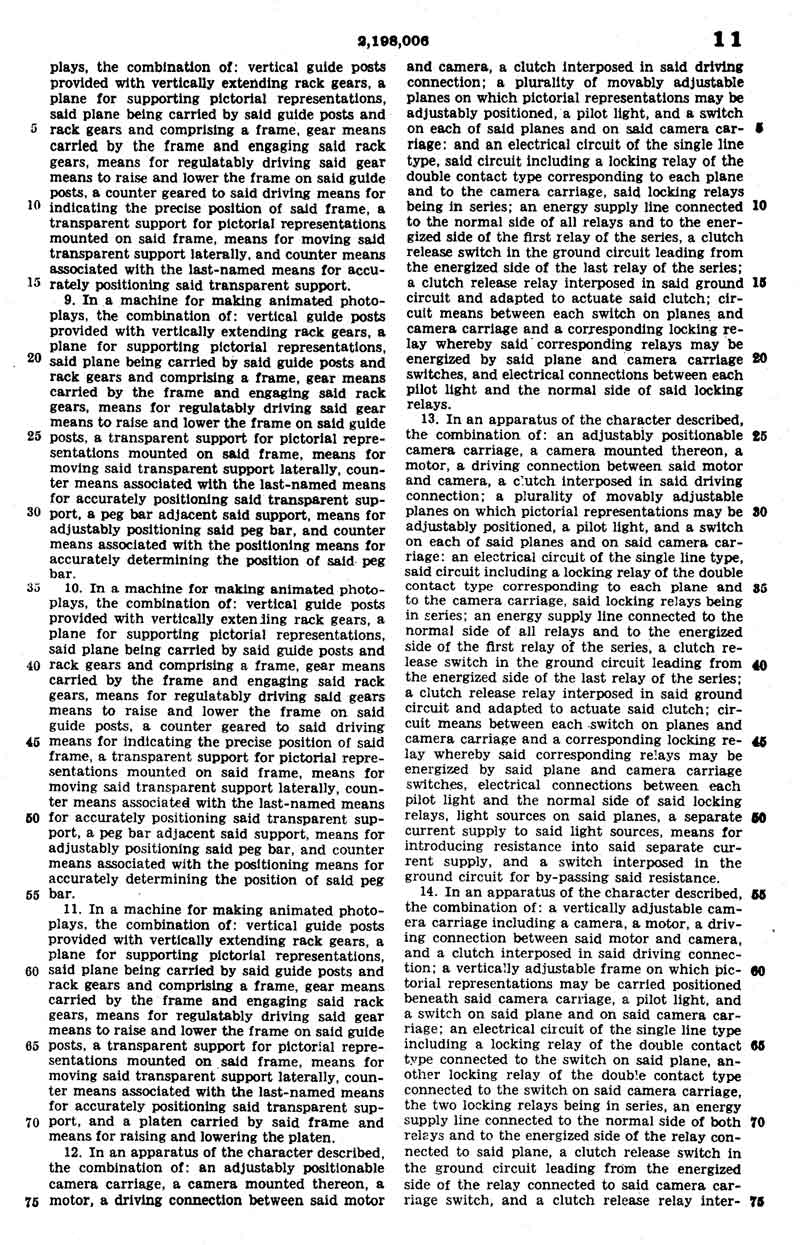
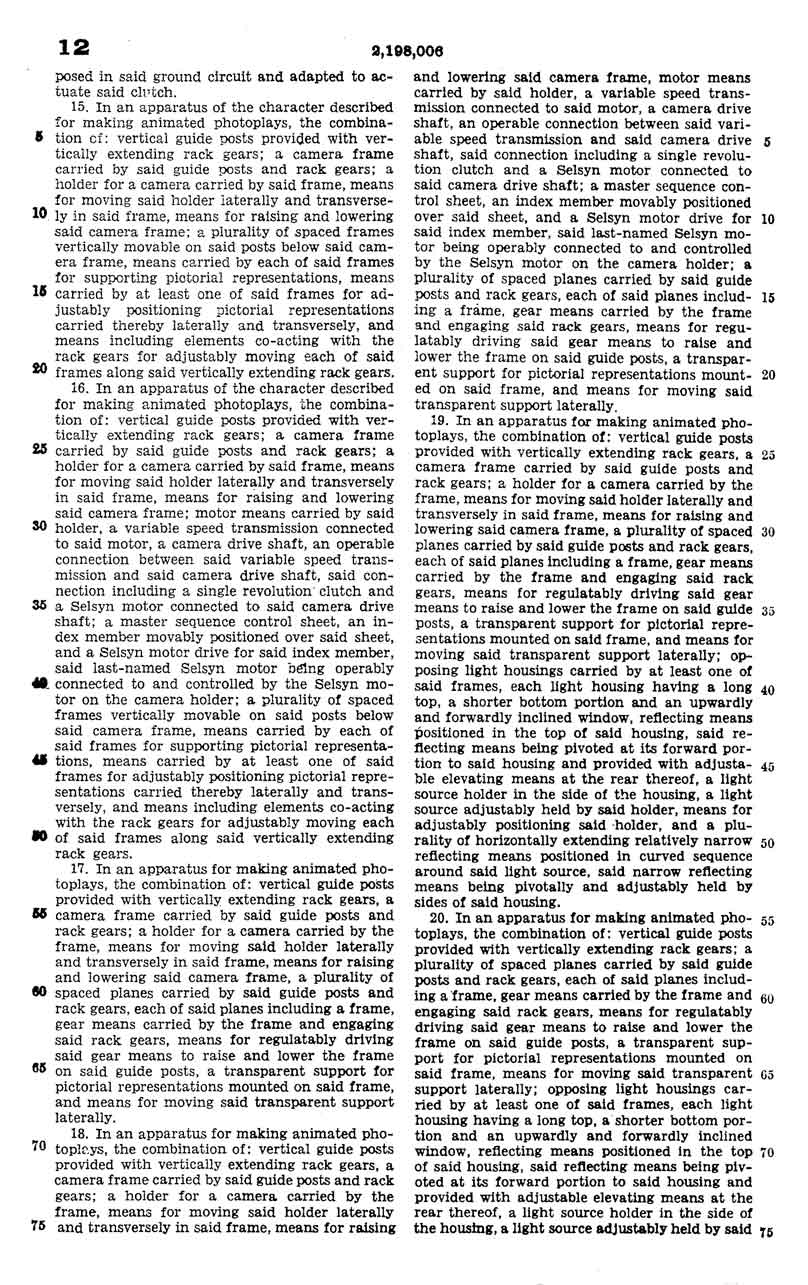
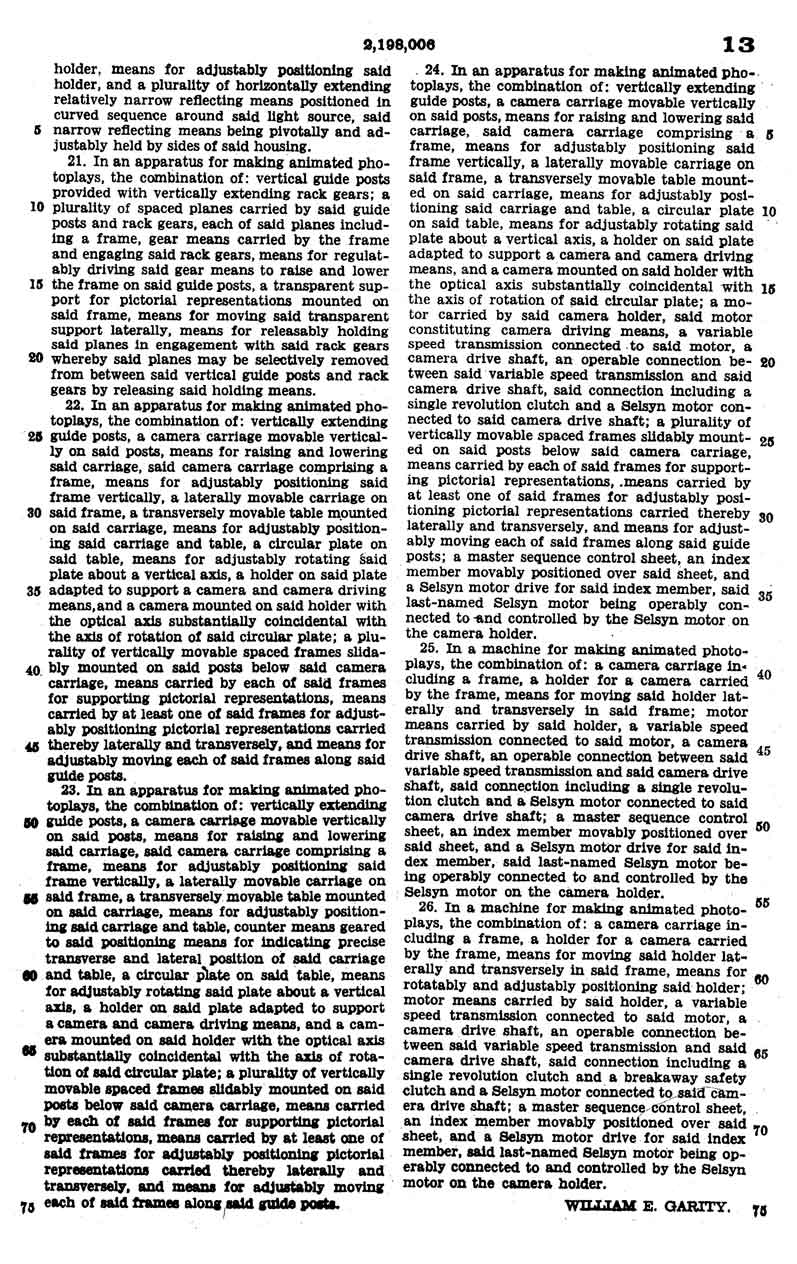
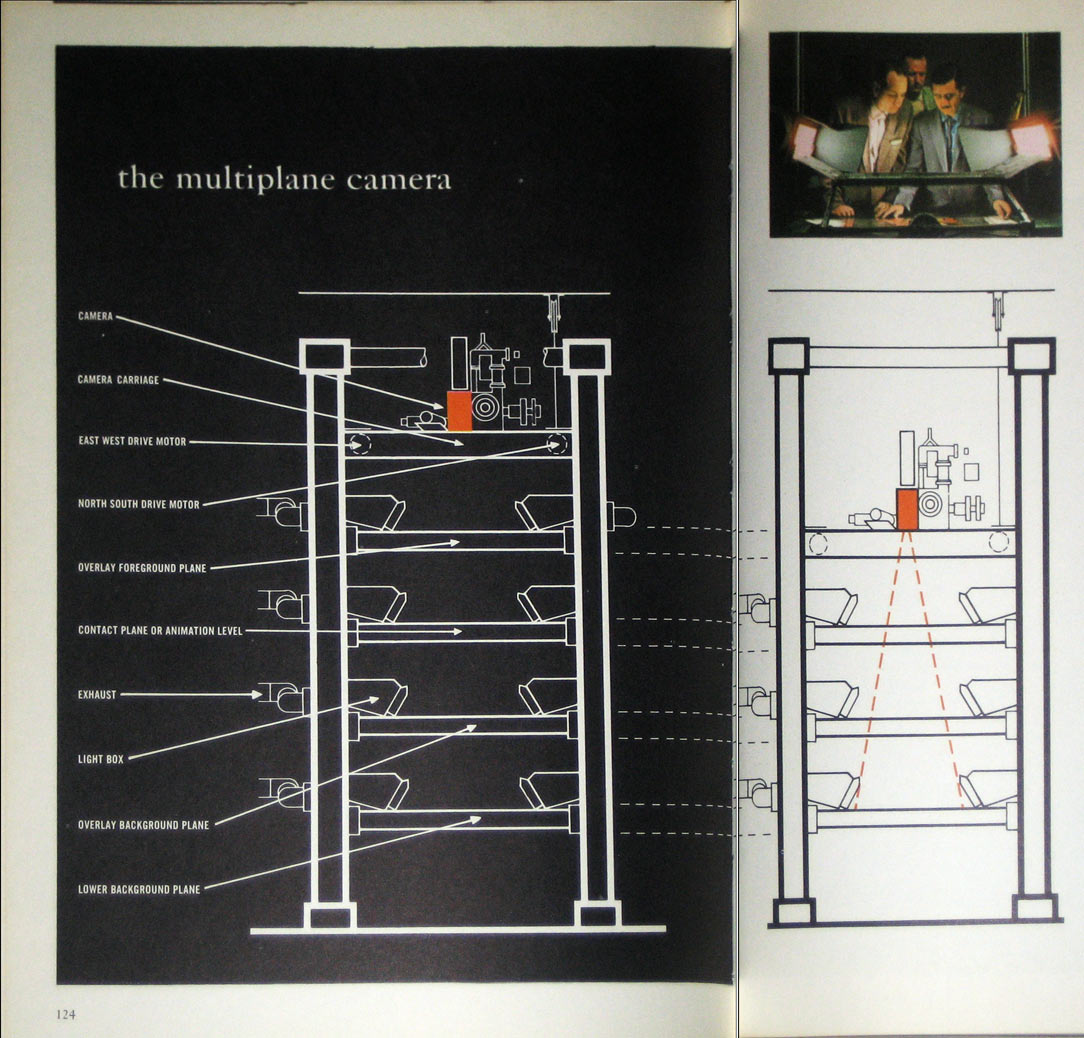
First the simplified drawing printed in Bob Thomas' Art of Animation (1958). It shows how the levels can move in relation to each other. Where the patent art was a complex schematic, this one is down to the basics...
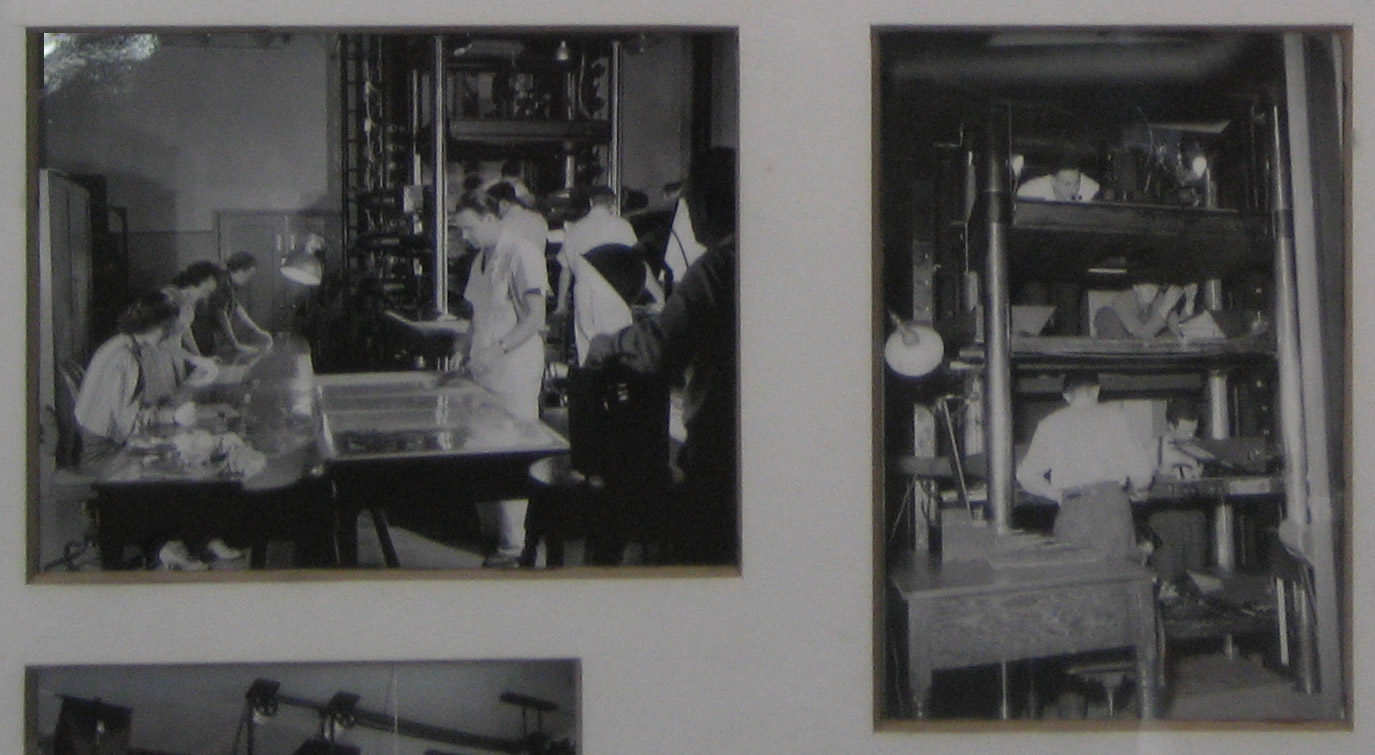
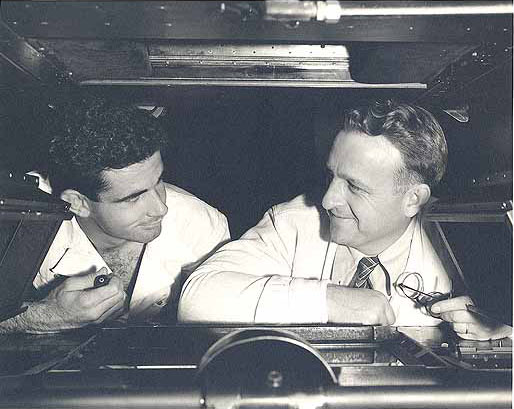
The camera at work - first in plain clothes (a clearer version of the one in the first posting of this series), then in lab coats, the two right images seemingly press pictures - the gent on the right seems to be the department head. (Suggestions anyone?)
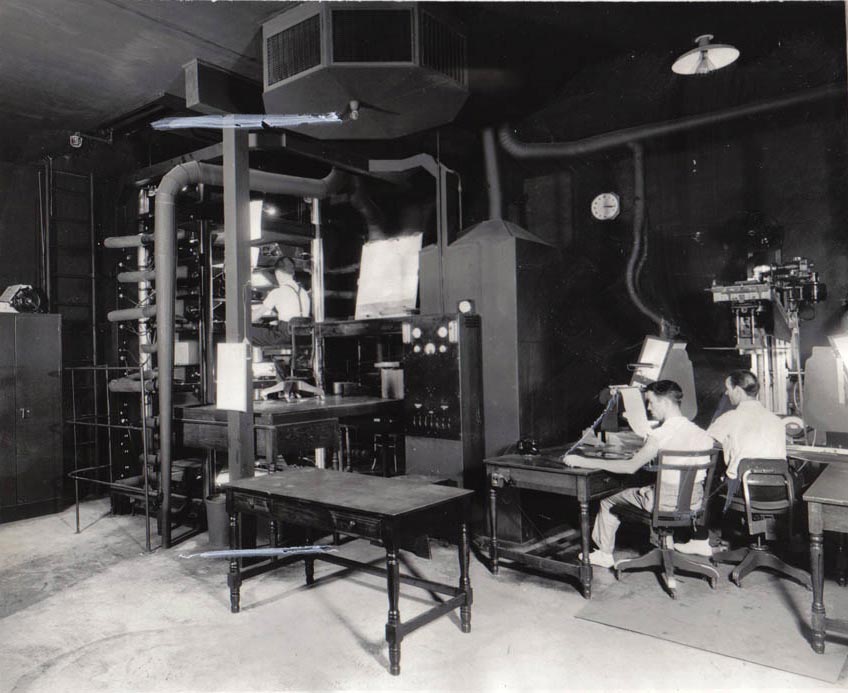
The next picture on the left has a caption written up: « The multiplane camera room. This new type of camera, developed within the studio at a cost exceeding $75,000, is seen at the left. It consists of seven movable horizontal planes so that characters can be shot at various levels. Each level can be individually lighted. The multiplane method also serves to give an illusion of depth to the photography. In many cases, it is not necessary to shoot a scene on the multiplane camera. Only about 30 per cent of the footage of "Snow White" was shot on the multiplane. » So this probably dates from early 1938, and seems to show the same camera as in the first picture above, with a fixed camera level. Note there is only one camera operator on the Multiplane crane. The Snow White draft only mentions two scenes specifically using Multiplane, Seq. 3-B Sc. 1 & 3, the end of her collapse with the animals' eyes. Some scenes are using the larger 6½ Field, though, and we saw in a technical reference that these first could only be shot on the Multiplane camera. It was used as a big version of a stationary setup!
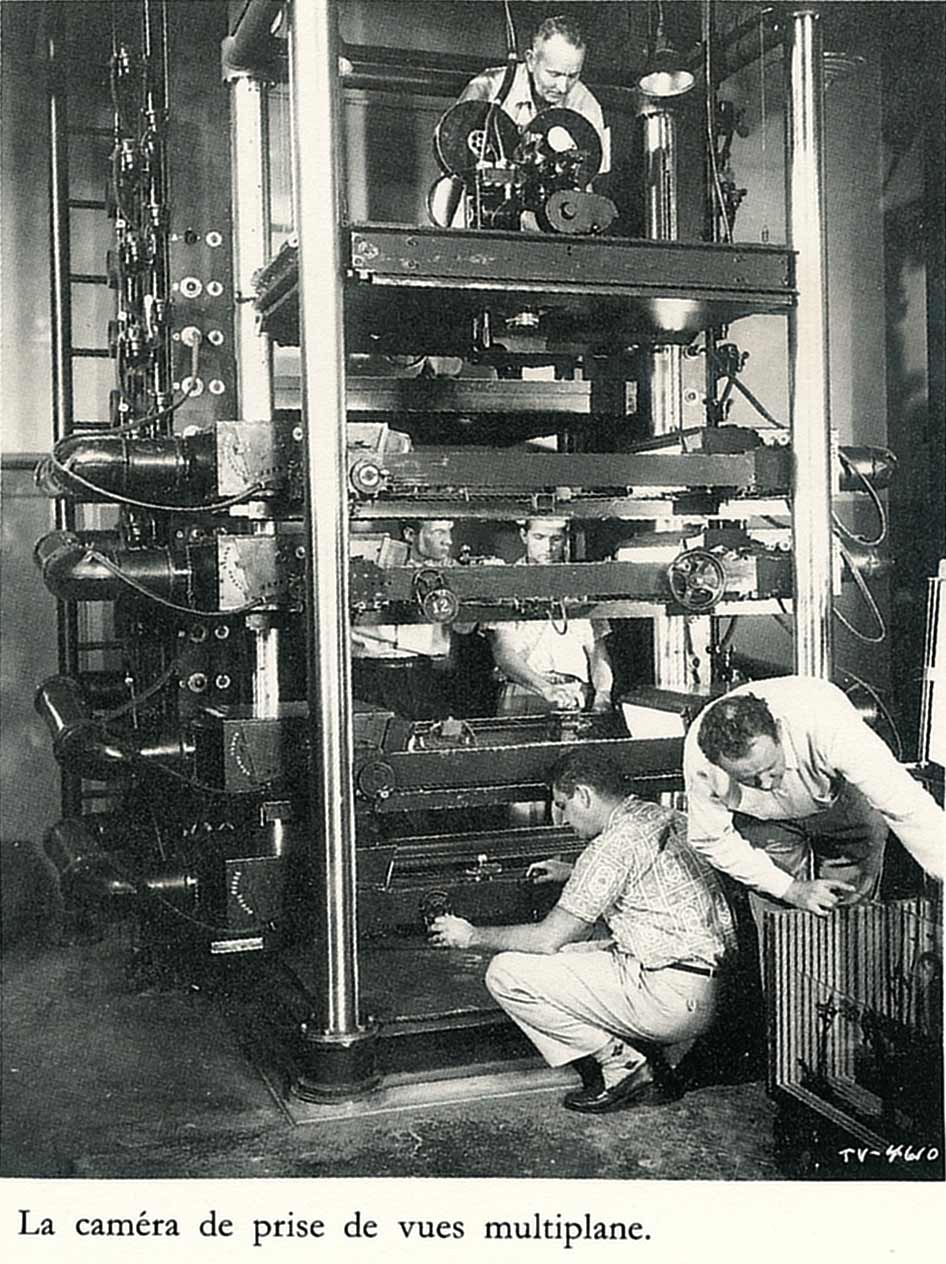
The center image comes from the curious French 1987 exhibition catalogue "Les Artistes de Walt Disney," edited by Pierre Lambert, who later did those wonderful glossy art books. I still wonder where he got his list of the Nine Old Men from... The neg number indicates that this was shot for a TV show. It seems to be a still for The Tricks of our Trade—more later. Note the holder for the glass panes.
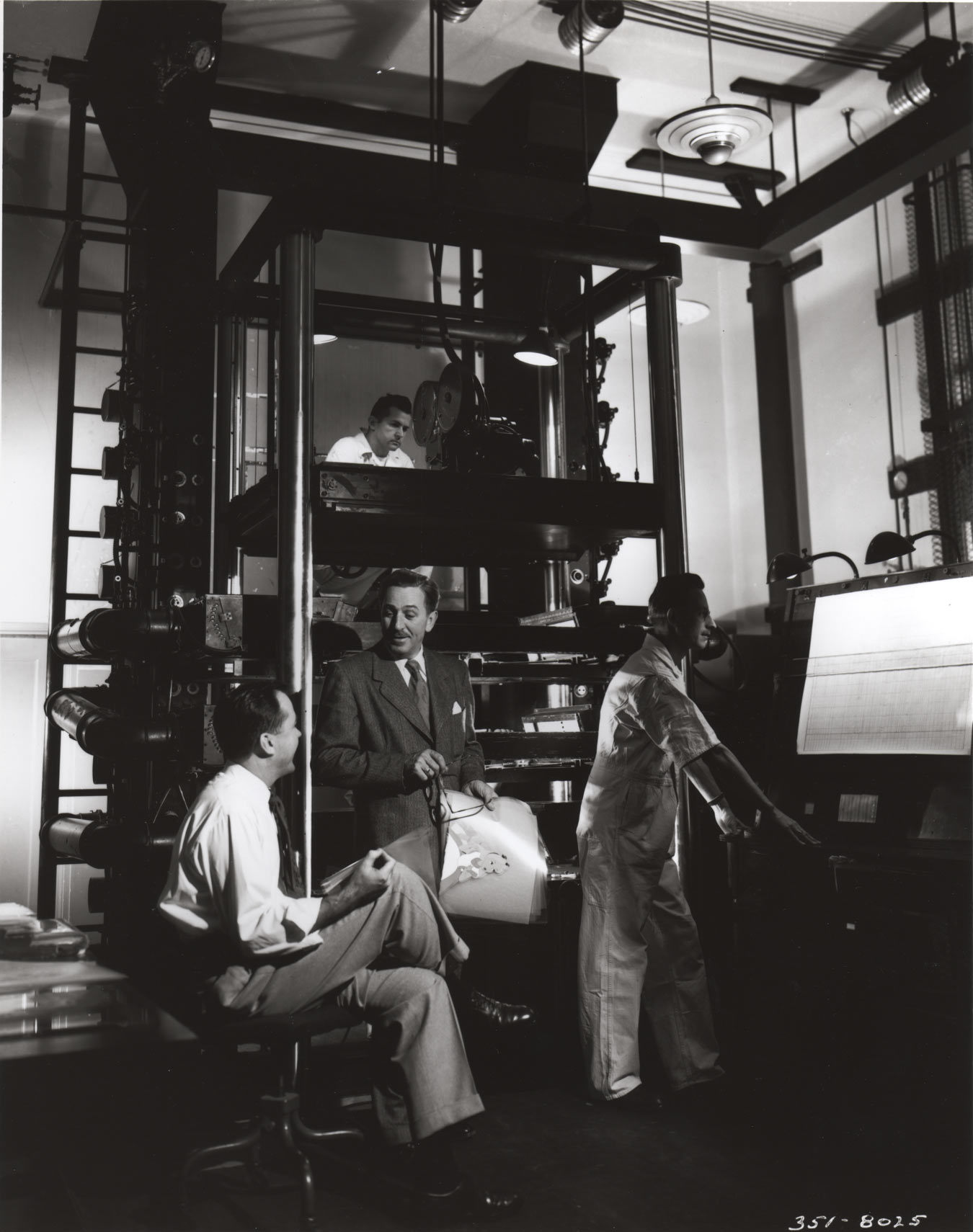
On the right we see Walt himself visiting the camera department during the shooting of Alice in Wonderland in March 1951.
As a treat within a treat, here is a little collection of Card Walkeriana. As you probably know, Esmond Cardon "Card" Walker (born in Rexburg, Idaho 1/9/1916 - died in La Cañada Flintridge, California 11/28/2005) started as mailroom clerk at Disney in 1938. Then worked in the camera department, and became one of the unit managers for short subjects. US Navy during WW2, then, back at Disney, head of the ARI, the Audience Research Institute, Disney's focus group research department. Vice president of advertising and sales in 1956, elected to the board 1960. President in 1971, CEO in 1976, Chairman of the board 1980, retired as CEO in 1983, member of the board of directors until 1999. Named Disney Legend in 1993. He was "one of Walt's Boys." But here, of course, we are only interested in him as cameraman.
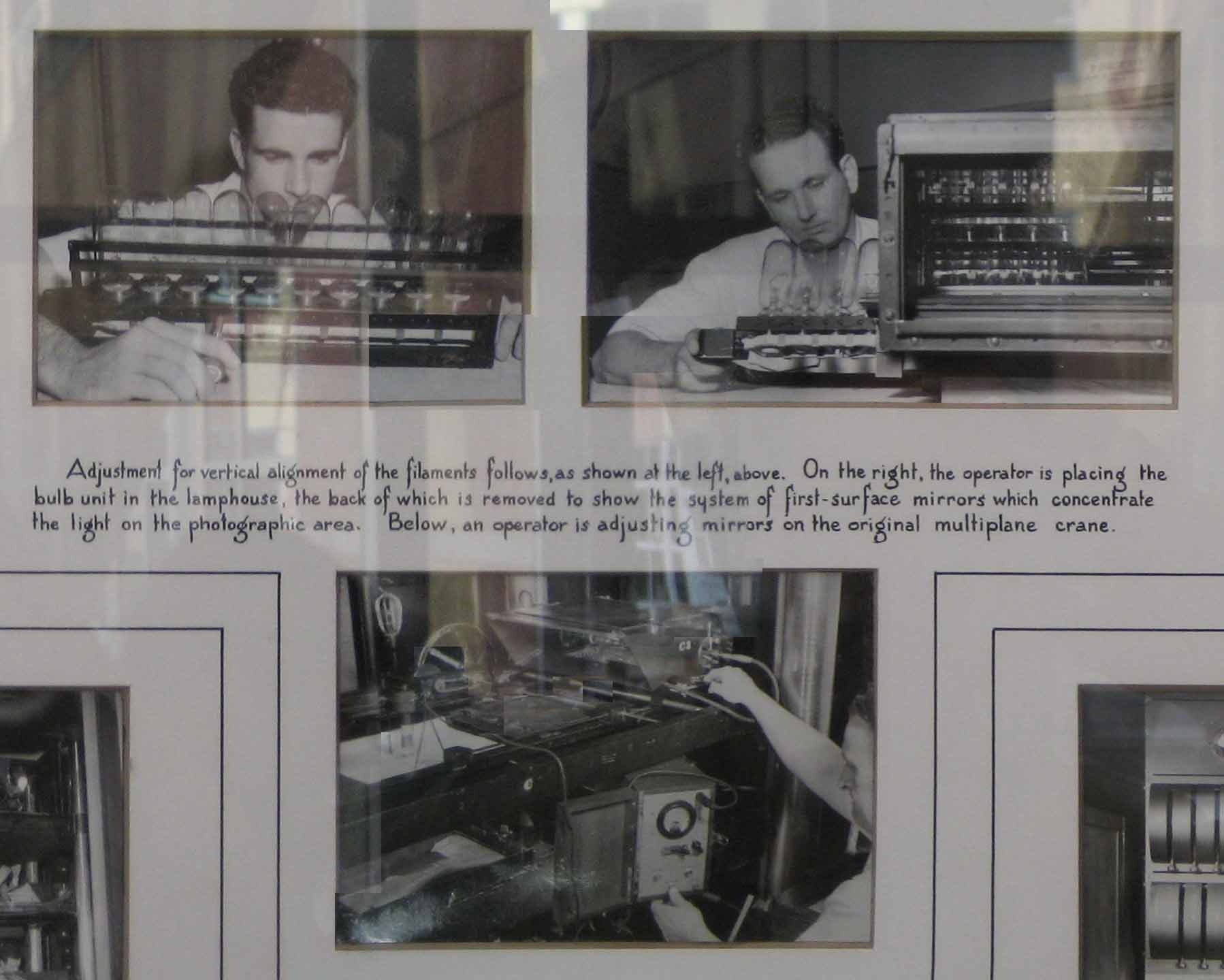
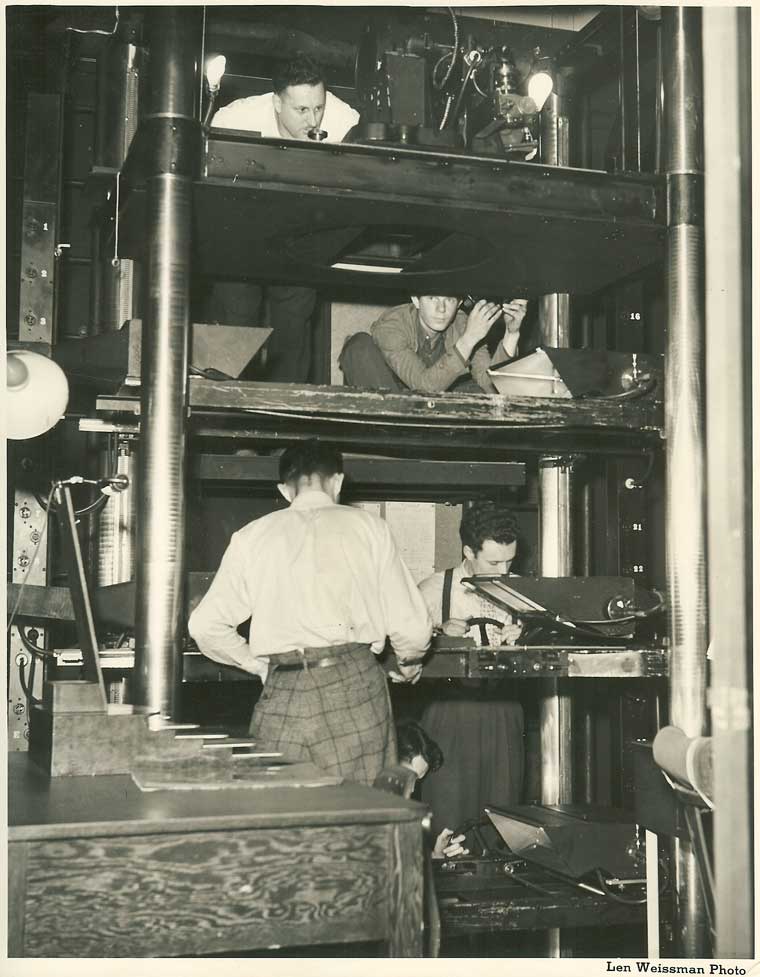
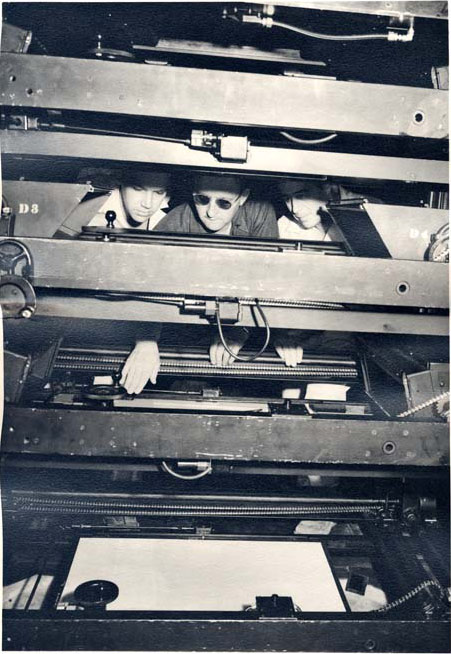
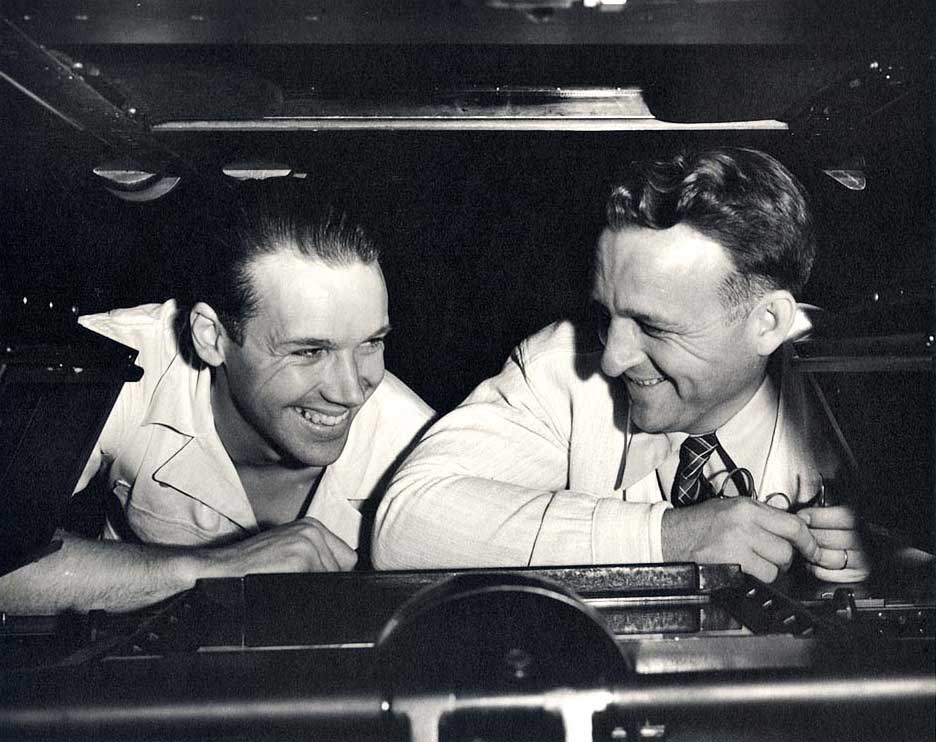
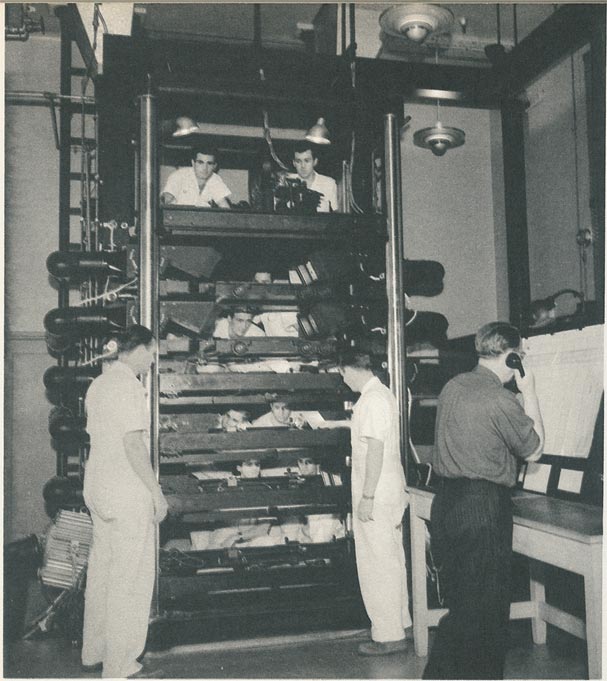
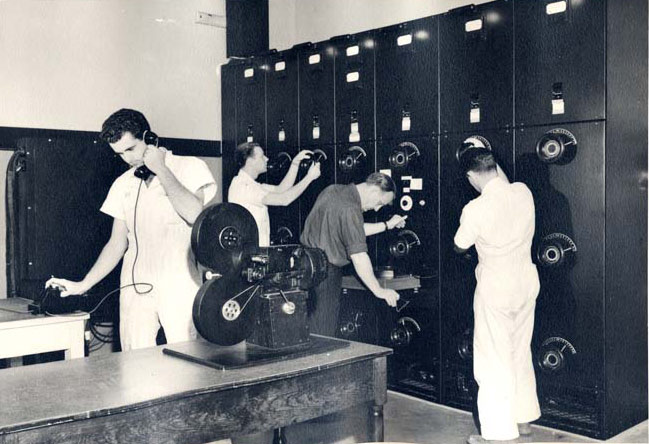
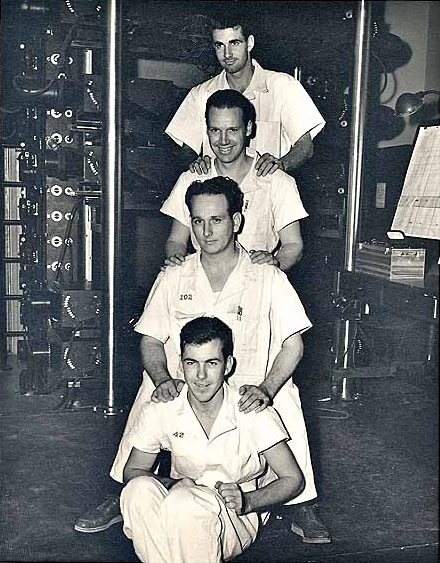
First the image from Finch's Art of Walt Disney (1973) with Walker top left, on the same camera as in the previous two images. Then the lamp voltage regulators, with the future company president on the phone. Then the same setup as above but with Card on the left - with eyes closed. Finally four members of the crew, with Card Walker at the top...[and below him Truman Woodworth, Dick Grills and Bob Gibeaut.]
That's all very nice, but of course the most important thing we can do is to remember to revisit the films that were made possible with this invention—not because of the camera, but because of their amazing storytelling and entertainment.
Relive the excitement of The Old Mill!
Watch Snow White and the Seven Dwarfs, "Walt Disney's First Full-Length Feature Production in Multiplane Technicolor." "When the script called for the camera to "'truck up' for a close-up," the lens remained stationary, while the cels moved upward." (From TCM).
Then see the second film released as being "in Multiplane Technicolor," Pinocchio—especially sequence 2 scenes 1.01 to 1.06—for arguably the most famous Multiplane shot over the rooftops of Geppetto's village, laid out by Thor Putnam, and costing as much as a $48,000 by itself, more than an entire short film. "The backgrounds which we were able to use on this camera for Pinocchio were twice as big as those which fitted into the original multiplane set-up used in Snow White." (From TCM's notes). The Pinocchio draft mentions most all Multiplane scenes.
Watch Fantasia again. It is brimming with Multiplane shots!
Check out the opening of Bambi as laid out by Dick Anthony.
Admitted, there are scratches and cel flicker. Still, you'll have to agree, the effects added by the Multiplane camera are stunning...
We end Multiplane week with the following piece that someone uploaded to YouTube. You can find this on one of the Disney Treasures DVDs - from the show The Tricks of our Trade, the February 13nd, 1957 Disneyland episode. It was obviously produced for entertainment, but hey, you see the actual camera at work! (As in Walt's intro to The Old Mill).
Nowadays, using computer technology "virtualizes" the Multiplane camera, so in most animation software used for hand-drawn film, one can in some way simulate by pressing a few buttons what might have taken a large crew weeks to accomplish back in the analog days of Pinocchio and Fantasia. I think it is good to learn how things used to be done, the hard, old-fashioned way, so we can make a better product in the future. Some things were more fun to do because it was harder to do them. Only occasionally I had the chance to work directly with a similar contraption, and yet - - -
I miss the romance of the Multiplane camera...
Here is my final posting to top off Multiplane week. I thought of spreading this out, like Disney's 18 month "year," but enough is as good as a feast, especially since most of the readers are out locating metal columns or attending welding class.
First the simplified drawing printed in Bob Thomas' Art of Animation (1958). It shows how the levels can move in relation to each other. Where the patent art was a complex schematic, this one is down to the basics...
 |
The camera at work - first in plain clothes (a clearer version of the one in the first posting of this series), then in lab coats, the two right images seemingly press pictures - the gent on the right seems to be the department head. (Suggestions anyone?)
 |  |  |
The next picture on the left has a caption written up: « The multiplane camera room. This new type of camera, developed within the studio at a cost exceeding $75,000, is seen at the left. It consists of seven movable horizontal planes so that characters can be shot at various levels. Each level can be individually lighted. The multiplane method also serves to give an illusion of depth to the photography. In many cases, it is not necessary to shoot a scene on the multiplane camera. Only about 30 per cent of the footage of "Snow White" was shot on the multiplane. » So this probably dates from early 1938, and seems to show the same camera as in the first picture above, with a fixed camera level. Note there is only one camera operator on the Multiplane crane. The Snow White draft only mentions two scenes specifically using Multiplane, Seq. 3-B Sc. 1 & 3, the end of her collapse with the animals' eyes. Some scenes are using the larger 6½ Field, though, and we saw in a technical reference that these first could only be shot on the Multiplane camera. It was used as a big version of a stationary setup!
The center image comes from the curious French 1987 exhibition catalogue "Les Artistes de Walt Disney," edited by Pierre Lambert, who later did those wonderful glossy art books. I still wonder where he got his list of the Nine Old Men from... The neg number indicates that this was shot for a TV show. It seems to be a still for The Tricks of our Trade—more later. Note the holder for the glass panes.
On the right we see Walt himself visiting the camera department during the shooting of Alice in Wonderland in March 1951.
 |  |  |
As a treat within a treat, here is a little collection of Card Walkeriana. As you probably know, Esmond Cardon "Card" Walker (born in Rexburg, Idaho 1/9/1916 - died in La Cañada Flintridge, California 11/28/2005) started as mailroom clerk at Disney in 1938. Then worked in the camera department, and became one of the unit managers for short subjects. US Navy during WW2, then, back at Disney, head of the ARI, the Audience Research Institute, Disney's focus group research department. Vice president of advertising and sales in 1956, elected to the board 1960. President in 1971, CEO in 1976, Chairman of the board 1980, retired as CEO in 1983, member of the board of directors until 1999. Named Disney Legend in 1993. He was "one of Walt's Boys." But here, of course, we are only interested in him as cameraman.
First the image from Finch's Art of Walt Disney (1973) with Walker top left, on the same camera as in the previous two images. Then the lamp voltage regulators, with the future company president on the phone. Then the same setup as above but with Card on the left - with eyes closed. Finally four members of the crew, with Card Walker at the top...[and below him Truman Woodworth, Dick Grills and Bob Gibeaut.]
 |  |  |  |
That's all very nice, but of course the most important thing we can do is to remember to revisit the films that were made possible with this invention—not because of the camera, but because of their amazing storytelling and entertainment.
Relive the excitement of The Old Mill!
Watch Snow White and the Seven Dwarfs, "Walt Disney's First Full-Length Feature Production in Multiplane Technicolor." "When the script called for the camera to "'truck up' for a close-up," the lens remained stationary, while the cels moved upward." (From TCM).
Then see the second film released as being "in Multiplane Technicolor," Pinocchio—especially sequence 2 scenes 1.01 to 1.06—for arguably the most famous Multiplane shot over the rooftops of Geppetto's village, laid out by Thor Putnam, and costing as much as a $48,000 by itself, more than an entire short film. "The backgrounds which we were able to use on this camera for Pinocchio were twice as big as those which fitted into the original multiplane set-up used in Snow White." (From TCM's notes). The Pinocchio draft mentions most all Multiplane scenes.
Watch Fantasia again. It is brimming with Multiplane shots!
Check out the opening of Bambi as laid out by Dick Anthony.
Admitted, there are scratches and cel flicker. Still, you'll have to agree, the effects added by the Multiplane camera are stunning...
We end Multiplane week with the following piece that someone uploaded to YouTube. You can find this on one of the Disney Treasures DVDs - from the show The Tricks of our Trade, the February 13nd, 1957 Disneyland episode. It was obviously produced for entertainment, but hey, you see the actual camera at work! (As in Walt's intro to The Old Mill).
Nowadays, using computer technology "virtualizes" the Multiplane camera, so in most animation software used for hand-drawn film, one can in some way simulate by pressing a few buttons what might have taken a large crew weeks to accomplish back in the analog days of Pinocchio and Fantasia. I think it is good to learn how things used to be done, the hard, old-fashioned way, so we can make a better product in the future. Some things were more fun to do because it was harder to do them. Only occasionally I had the chance to work directly with a similar contraption, and yet - - -
I miss the romance of the Multiplane camera...
Labels: Bill Garity, Other Disney
posted by Hans Perk at 6:00 AM
9 comments